

Boston · Planning Guide
Documentary Wedding Photography · Boston & New England
TL;DR, Hill-Stead Museum Wedding
Updated September 14, 2026
Hill-Stead Museum at a glance
| Venue | Hill-Stead Museum, a National Historic Landmark since 1991 |
|---|---|
| Address | 35 Mountain Road, Farmington, CT 06032; the Farmington Valley, about 20 minutes west of Hartford |
| Setting | 1901 Colonial Revival house by Theodate Pope Riddle on 152 acres with 3 miles of dry stone walls; West Lawn on a knoll over the meadows; 1920s Sunken Garden by Beatrix Farrand |
| Capacity | West Lawn up to 400 tented; Grass Court 150 to 200; Sunken Garden 200 standing / 16 in the summer house; Makeshift Theater up to 100 seated; Glass Room 40 to 50 |
| Ceremony | West Lawn and Veranda, or the Sunken Garden; $800 ceremony fee; one-hour rehearsal the day before included |
| Reception | Tent on the West Lawn or Grass Court; Makeshift Theater (1917, in the Carriage Barn) for under 100, year-round |
| Season | Outdoor weddings May through October (museum); indoor rooms year-round |
| Hours | Open to the public until 4 pm; six-hour rental; start and music-off times set by the museum (see FAQ) |
| Starting fee | $8,500 for 100 tented guests, $6,000 Makeshift Theater, $800 ceremony, $700 fire watch, $500 deposit (museum rate sheet, 2024) |
| Catering & bar | Full-service caterer required; approved list last published (2024): Cafe Louise, David Alan Hospitality Group, Doro, Emily's Catering Group, Forks & Fingers, Russell's Global Cuisine, Verbena; bar through the caterer only |
| Lodging | Farmington Inn, Avon Old Farms Hotel, Delamar West Hartford (museum list); Hampton Inn & Suites and Courtyard in Farmington |
| Parking | On-site, well-lit, included; portable restrooms required over 150 guests |
| Best photo spots | Path above the Sunken Garden, the garden's walls and hedges, the veranda, the West Lawn at sunset, the tent at blue hour, the gallery inside if the museum allows |
| Weddings we've photographed here | a tented summer wedding at Hill-Stead Museum |
Hill-Stead Museum is a 1901 Colonial Revival house museum and National Historic Landmark on 152 acres in Farmington, Connecticut, with a West Lawn ceremony site overlooking the meadows, a one-acre Beatrix Farrand Sunken Garden for cocktail hour and tented receptions on the lawns for up to 400 guests.
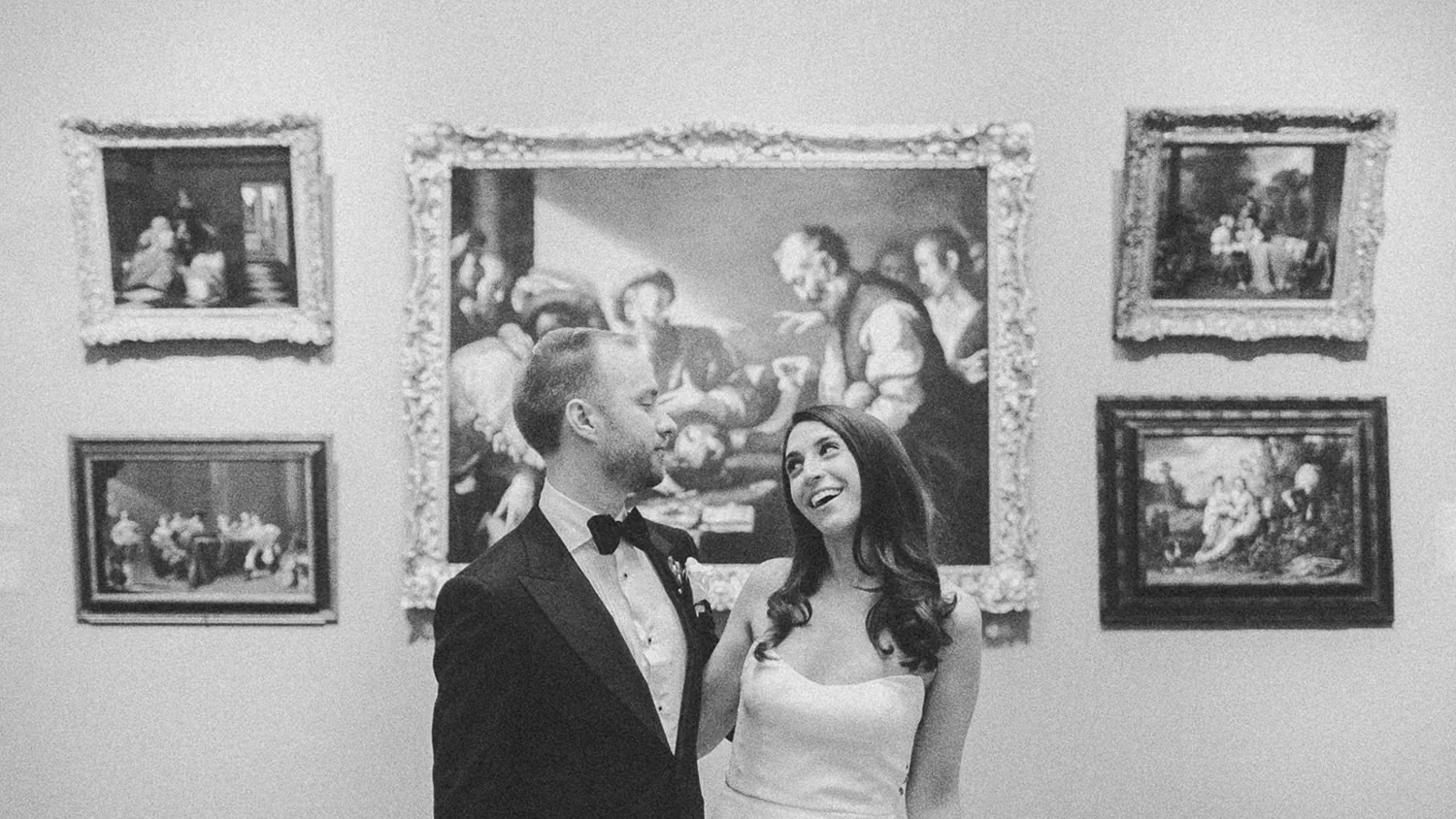
The house was the first building Theodate Pope Riddle ever designed. She was in her early thirties when work began in 1898, drew it for her parents with McKim, Mead & White turning her drawings into plans, and went on to become the first woman licensed as an architect in New York and, in 1926, a Fellow of the American Institute of Architects. In 1915 she survived the sinking of the Lusitania, pulled from the water and laid among the dead before someone noticed she was breathing. She died in the house in 1946 and left it to the public in her will; it opened as a museum the next year with her father’s Monets, Manets, Degas, Cassatts and Whistlers still hanging where he hung them. The black and white photo at the top of this page was made in front of them.
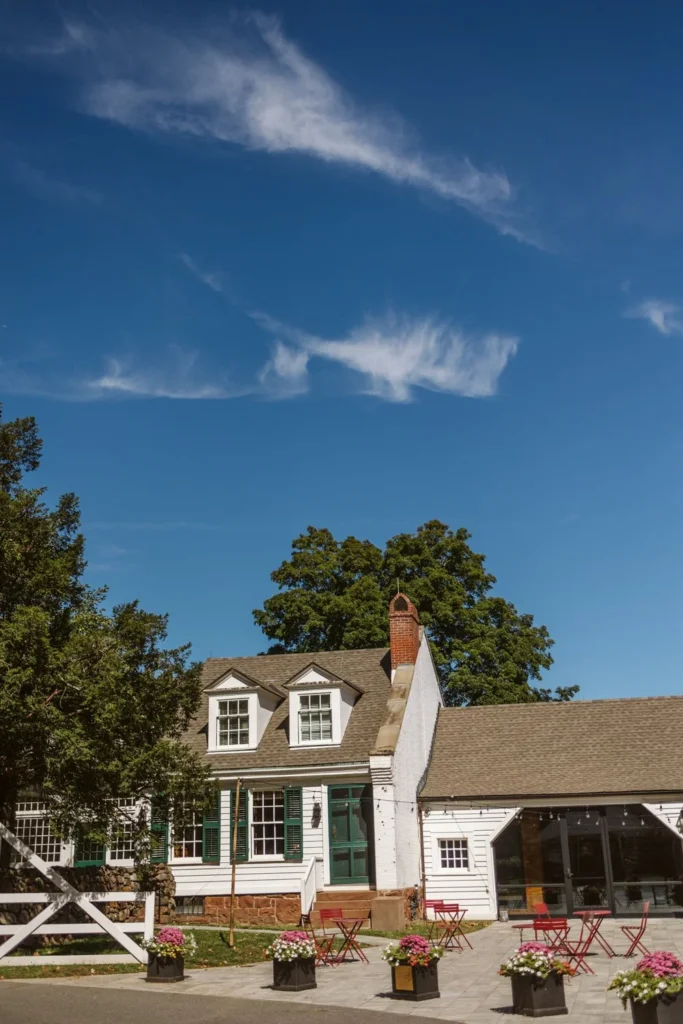
Henry James, who visited in May 1911, called it a great new house on a hilltop; Mary Cassatt and Theodore Roosevelt were house guests too. The hilltop is the point for a wedding. The West Lawn sits on a knoll with the Farmington meadows, a pond and the hills beyond it, and the Mount Vernon-style veranda faces that view, so your guests look at you and the valley at the same time. Below the house, the Sunken Garden fills a natural hollow inside dry-laid stone walls: an octagon of yew hedges around a summer house, with 36 flowerbeds and close to 90 plant varieties that Farrand laid out in the 1920s for Theodate’s mother. Dinner and dancing go under a tent on the West Lawn or on the Grass Court, which was the family’s grass tennis court.
Hill-Stead is a bring-everything venue: the museum rents you the grounds, a bridal suite, parking, a guard and a supervisor, and you bring a full-service caterer, a tent company, a rental company and, as the museum strongly encourages, a coordinator. That’s more moving parts than a hotel, and it’s why no two weddings here look alike. Its nearest cousin in our portfolio is the Peabody Essex Museum in Salem, another wedding where the collection is in the building and the party is outside it.
For a documentary photographer the appeal is that nothing here happens in one room. The first look is on a path above the garden, the vows are on the lawn, cocktails are down in the hollow, dinner is under canvas, and the walk between each of them is a picture. We follow the day rather than arrange it, and the West Lawn at seven in the evening is one of the best pieces of light we’ve worked in New England. Our Boston wedding photography portfolio shows the same approach at other estates.
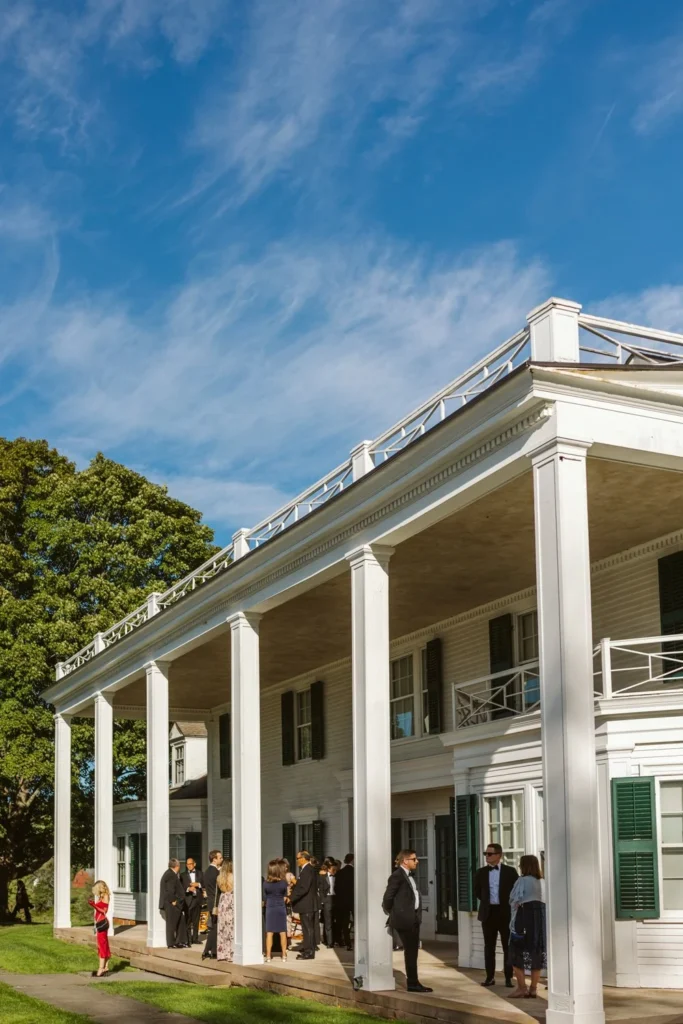
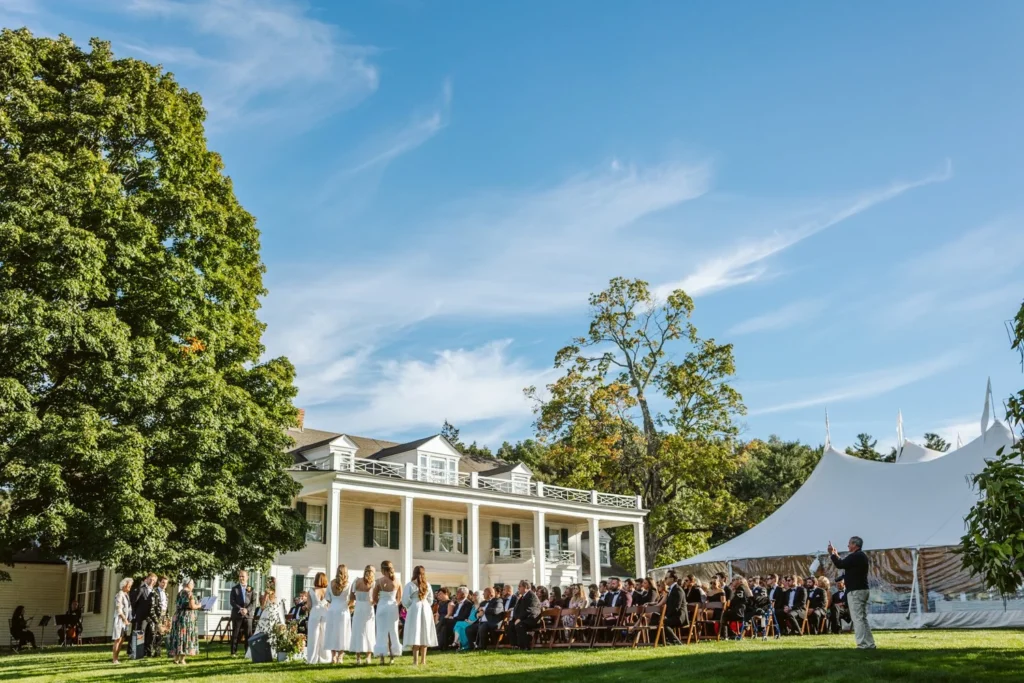
Hill-Stead is the Farmington Valley venue for couples who want a real estate rather than a banquet hall with a lawn attached. Over three miles of dry stone wall edge the property, the house in the background of every frame has been a National Historic Landmark since 1991, and Connecticut Magazine once put it among the nine most out-of-the-ordinary places in the state to hold a reception.
Because the museum books a single wedding per weekend, you get the rehearsal the night before and the property to yourselves on the day.
The museum provides a security guard and an event supervisor for the full six hours, a bridal suite from 2 pm and parking; your coordinator and caterer run the floor. For photography, the fixed points are what help: a six-hour rental with an early-evening music cutoff means the toasts, the parent dances and the cake all happen while there’s still a crowd, and a ceremony that can’t begin until after the museum closes to the public at 4 means a first look at 2:30 is the surest way to get portraits in good light in October.
We’ve photographed and filmed here. The whole day is in our post on a tented summer wedding at Hill-Stead Museum, and three films from it are further down this page.
A Hill-Stead wedding moves across the estate in an arc: down the tree-lined drive, out to the West Lawn for the vows, down into the Sunken Garden for cocktails, back up onto the lawn and under the tent for dinner, all inside a three-minute walk of the house. Each stop has its own light: the meadow at 5 pm, the garden in the shade of its walls, the canvas glowing against the white house at blue hour.
Here’s what the ceremony and the reception look like on this property, and what we’re paying attention to at each.
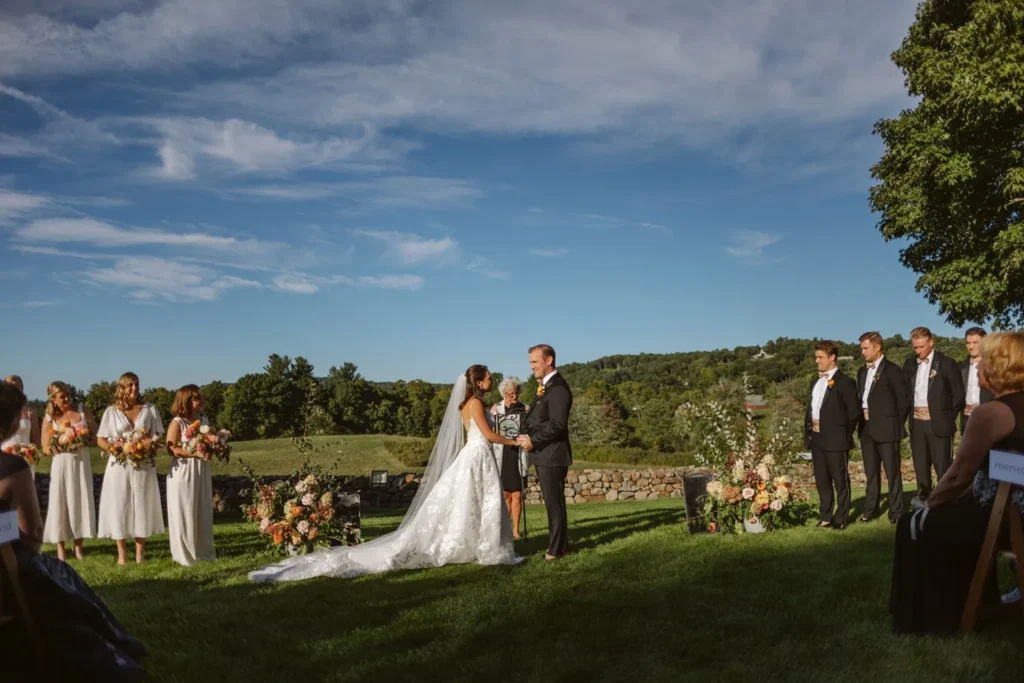
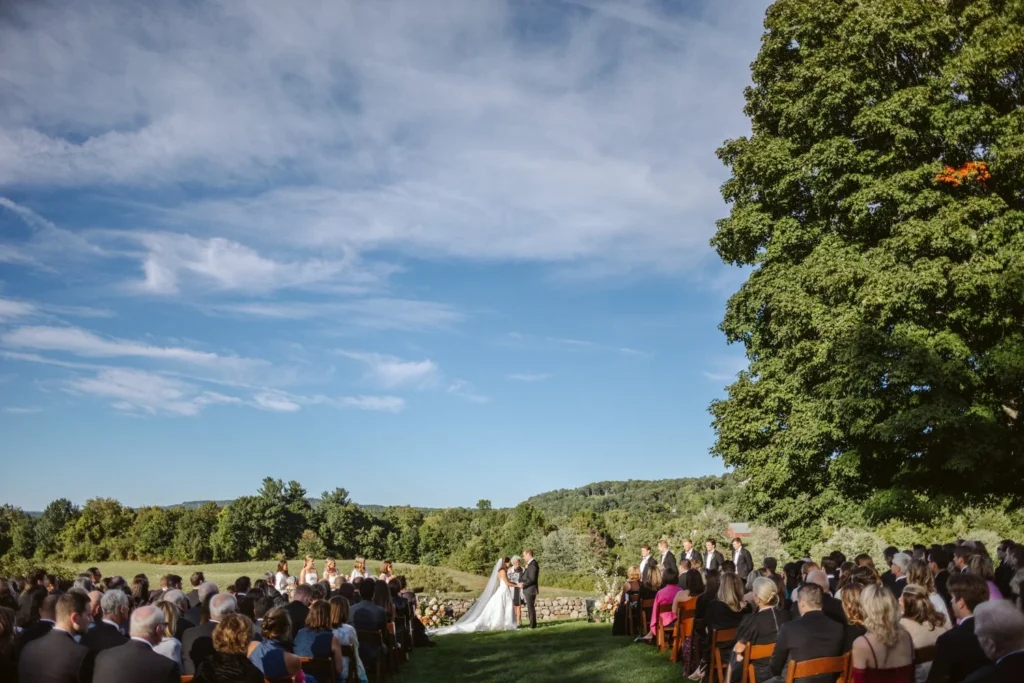
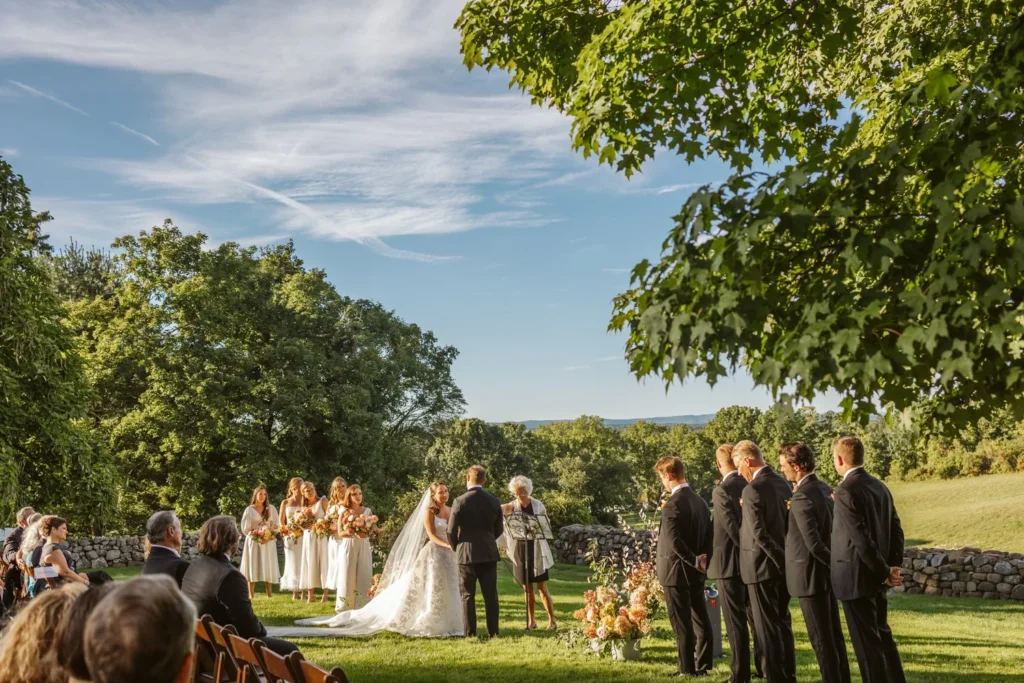
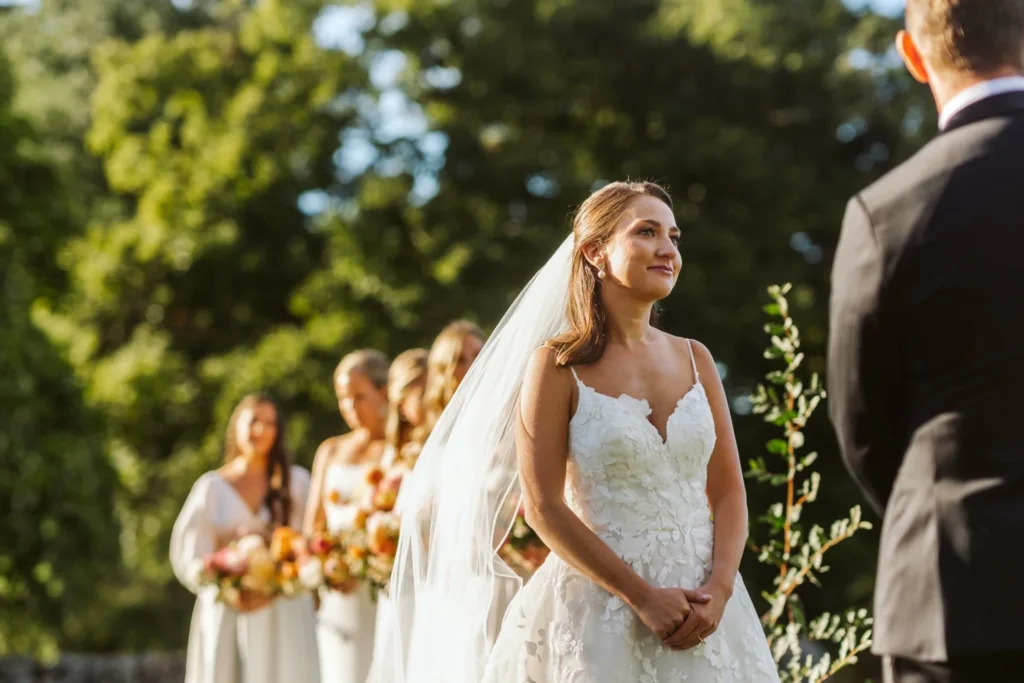
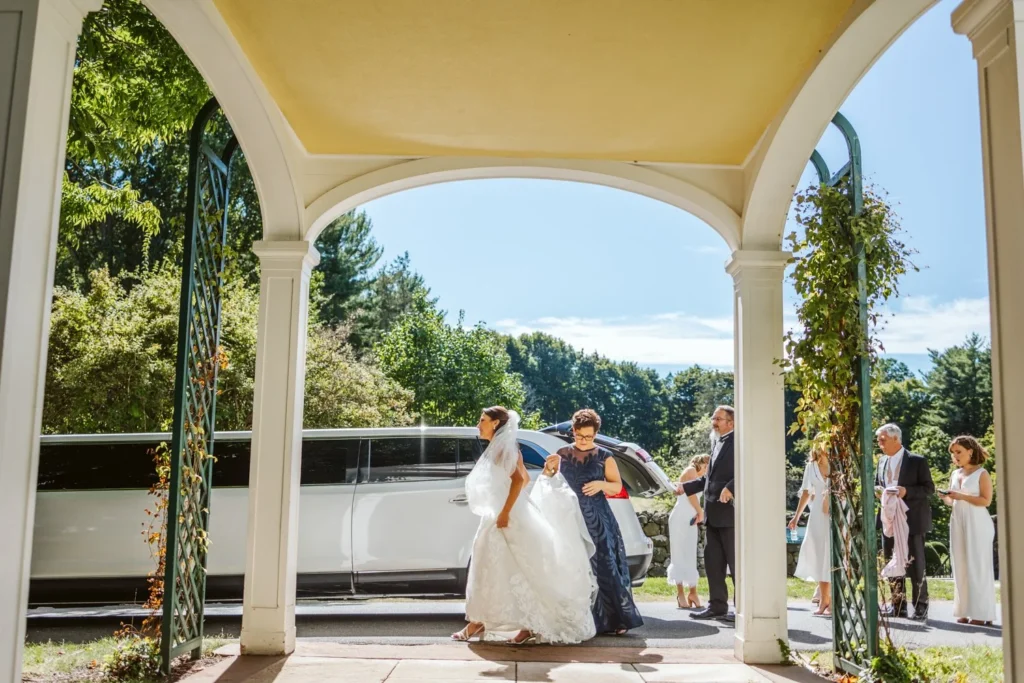
The ceremony faces out from the veranda across the West Lawn, with the meadow, the pond and the hills behind the two of you and the columns of the house behind your guests. The museum lists the lawn for events up to 400, charges an $800 ceremony fee, and includes a one-hour rehearsal the day before because it never books two weddings in one weekend. Ceremonies happen after the museum closes to the public at 4, and in summer that late-afternoon start puts the sun low and to the side, the softest light this lawn gets.
If rain comes, the vows move under the reception tent. We shoot the ceremony long from the back rows and the sides, so the frames are of the two of you and the valley, not of a photographer in the aisle. For the order of service, our wedding ceremony tips cover the rest.
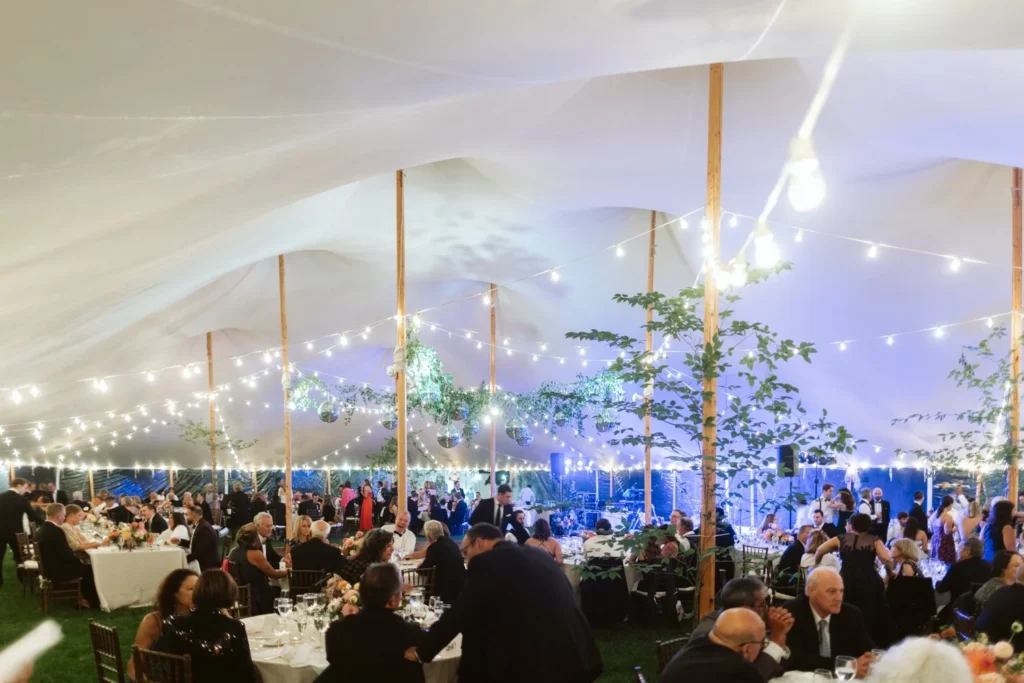
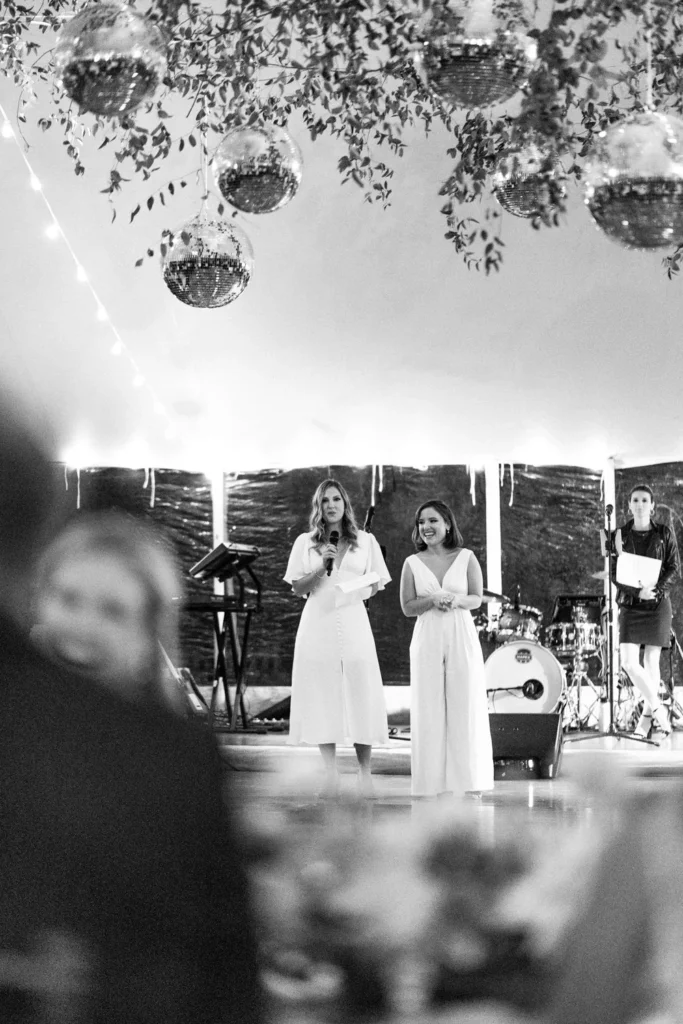
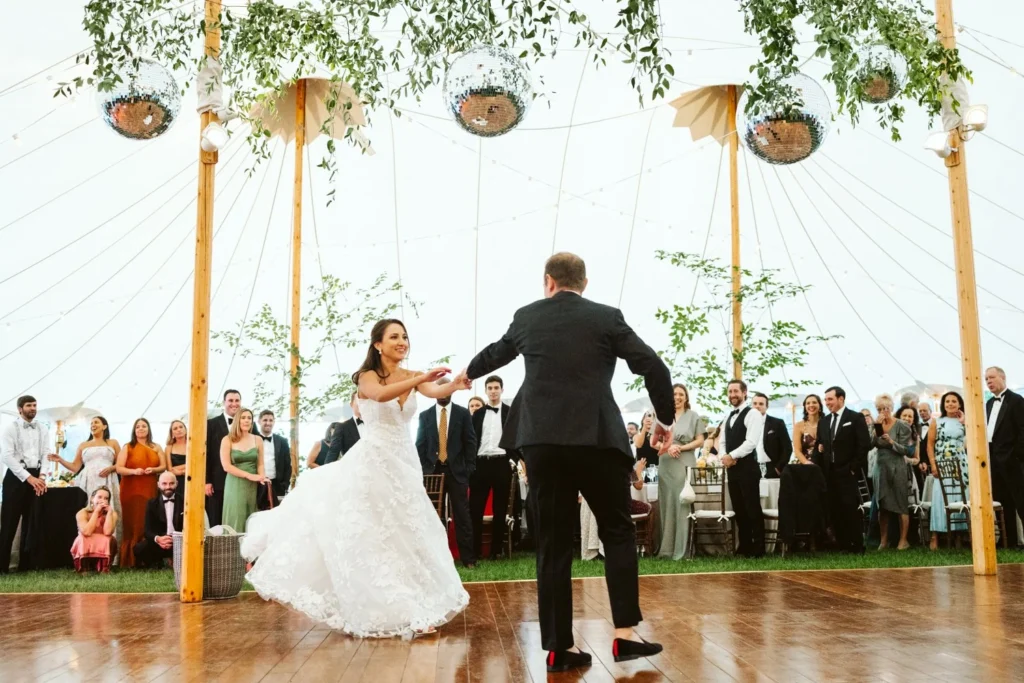
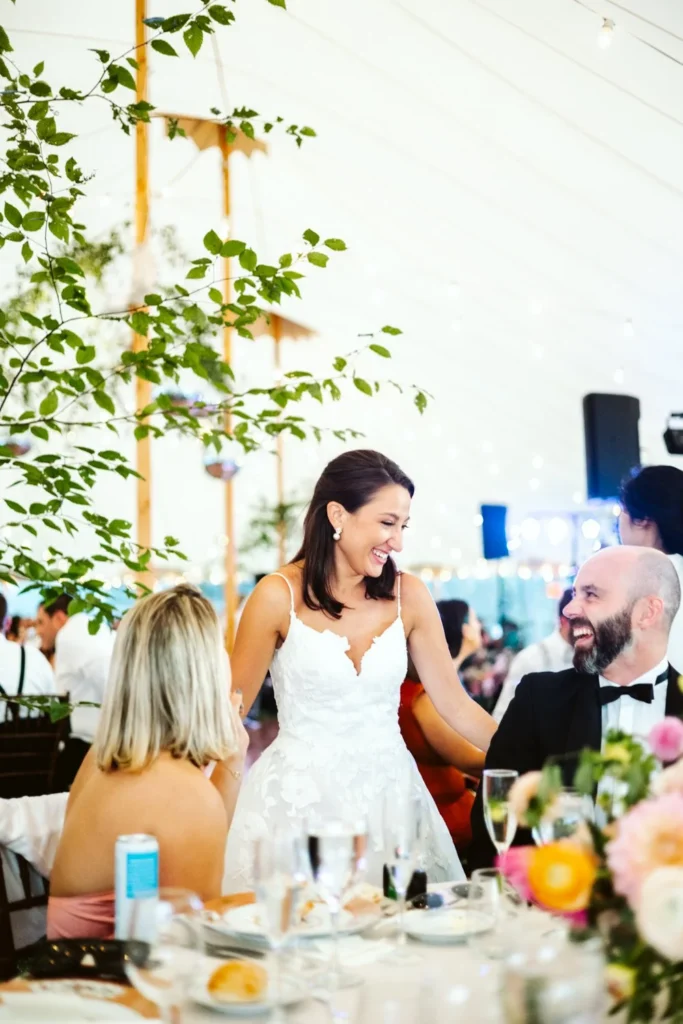
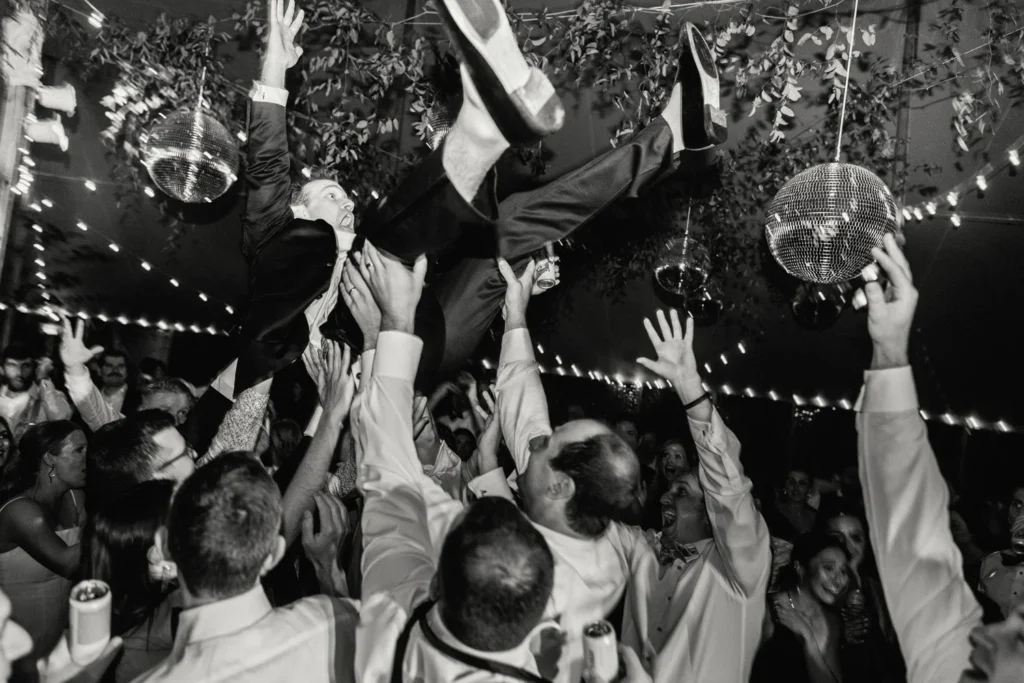
Dinner and dancing go under a tent on the West Lawn, or on the Grass Court next to it for 150 to 200; the museum’s approved tent companies are Sperry Tents, Taylor Rentals, CT Rental Center and Tents Unlimited, and the Town of Farmington sends a fire watch to every tented event, a $700 fee the museum says can’t be waived. Tables, chairs and linens are all rented in, so the room is yours to design. At the wedding we shot, a sailcloth Sperry tent had greenery and disco balls over the dance floor and an eight-piece band on a stage. Under 100 guests, the Makeshift Theater in the Carriage Barn is the indoor option.
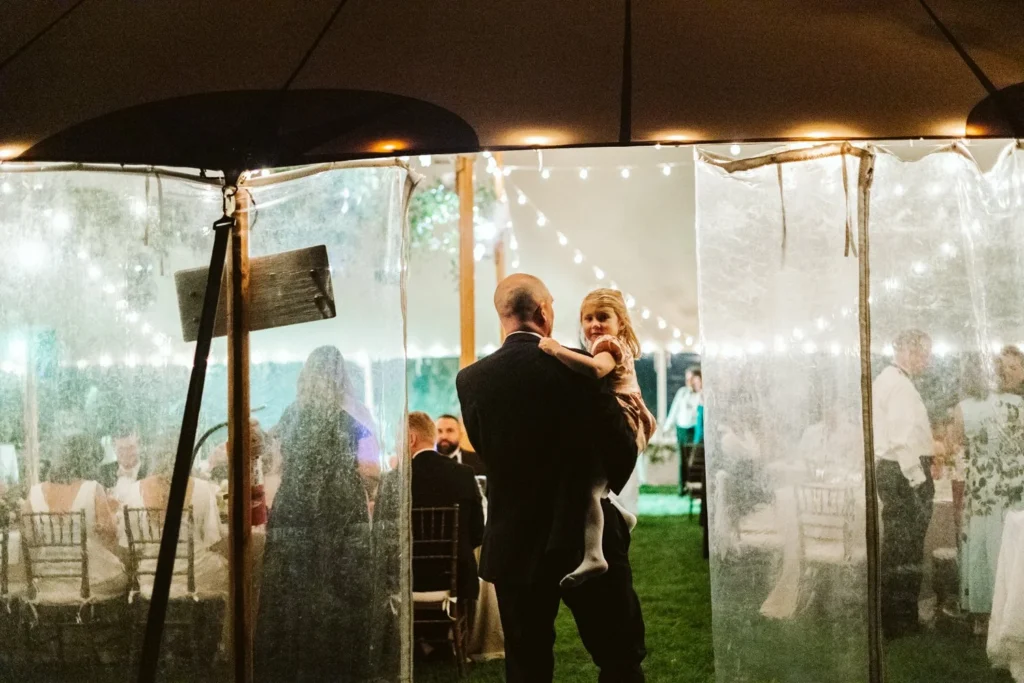
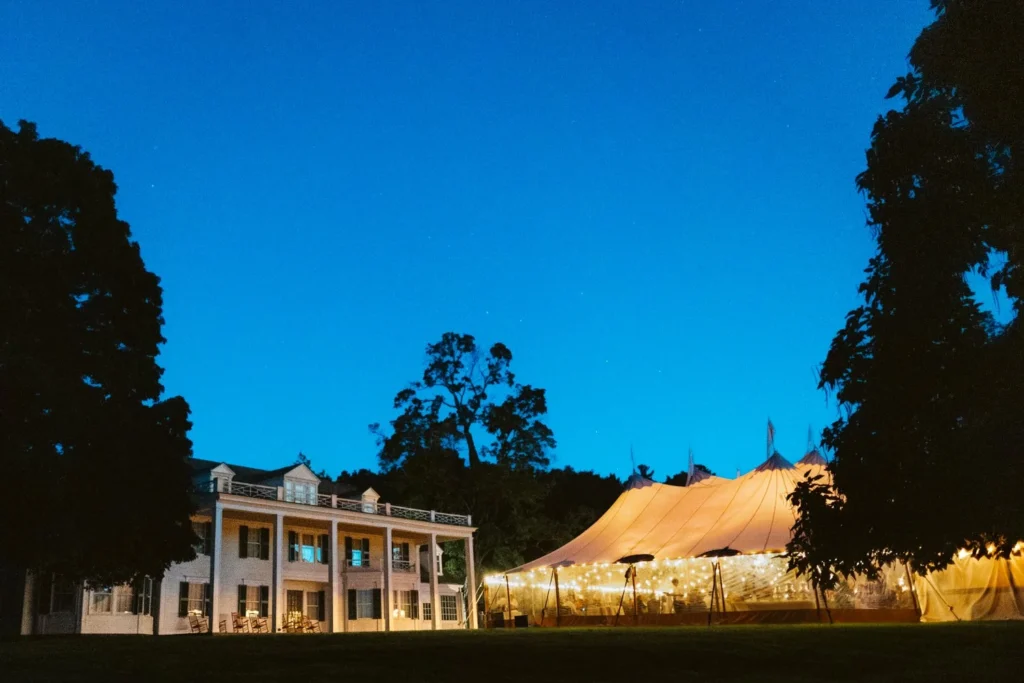
Sailcloth is a gift after dark: it glows from the inside, the string lights carry the dance floor, and clear sidewalls put the house in the background of the parent dances.
The museum’s outdoor wedding season runs May through October. Inside those months the light changes more than the venue does, and here is how we would plan around it.
Farmington’s sun sets at about 8:29 on June 20 and 7:52 by mid-August, so a 4:30 or 5:00 ceremony leaves cocktail hour in the garden, dinner under the tent and still a golden-hour walk onto the West Lawn before cake, all inside the six-hour rental. The Sunken Garden is at its fullest and the tent walls come off for the air coming up from the meadow.
See a tented summer wedding at Hill-Stead Museum and the three films below.
September and October bring the lowest light and the hills behind the ceremony turning. Sunset is 7:02 in mid-September and 6:31 by the first days of October, which lands inside cocktail hour, so we plan the lawn portraits for right after the recessional and again for ten minutes as the sun goes. The trees along the drive go gold, and the West Lawn keeps its view of the hills as the meadow browns off.
May opens the tent season with the garden coming into bloom and the meadow bright green. From November through April, the Makeshift Theater hosts weddings indoors year-round, up to 100 seated at tables; the Glass Room seats 40 to 50 for a small dinner with the kitchen garden and the hills through its walls. We haven’t photographed a winter wedding here yet, and we would like to.
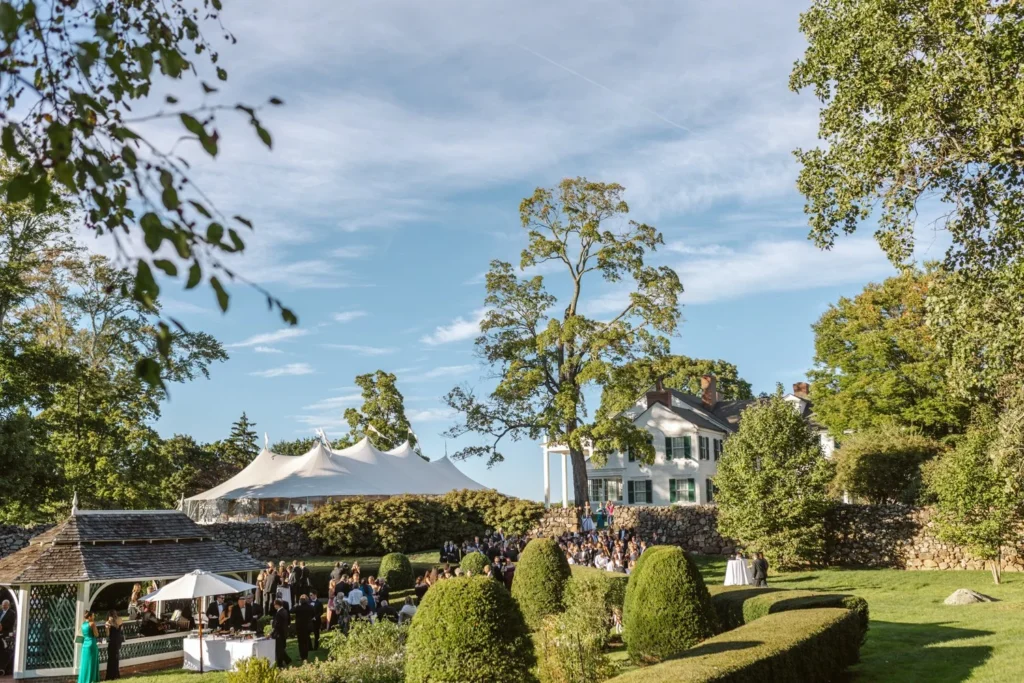
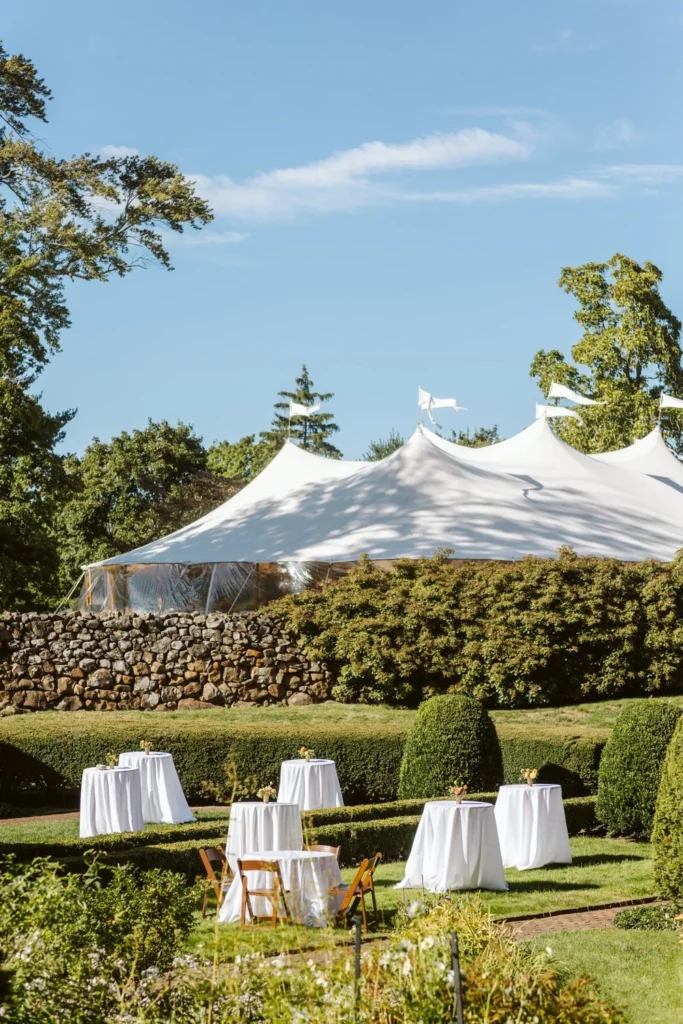
Cocktail hour at Hill-Stead goes down into the Sunken Garden, the one-acre walled garden below the house, and onto the upper courtyard beside it. The museum rates the garden for 200 standing, the bar sits against the stone wall, the cocktail tables go between the hedges and the flowerbeds, and the summer house at the center seats 16 if a grandparent needs a chair. The tent peaks show above the hedge line, which is the frame at the top of the cocktail section on this page.
When we photographed here, the museum’s advice to the couple was to finish formal photos before the ceremony so they could actually stand in that garden, and we would add the practical reason: with a six-hour rental, an hour lost at cocktail time doesn’t come back. With no first look, we make one wide photo of both families at the veranda columns straight after the recessional, send everyone down the garden steps, and pick off the parents, grandparents and siblings among the hedges in about fifteen minutes.
Then the garden does the work. A stone-walled hollow full of people at 6 pm is where the pictures nobody planned turn up: a grandmother on the summer-house bench, friends who haven’t seen each other since college discovering the meadow, the toast someone gives too early. If there’s a second photographer, this is their post while we’re up on the lawn with the two of you.
You can see how the garden played out at a tented summer wedding at Hill-Stead Museum.
Hill-Stead gives you six or seven distinct backdrops without a car. These are the ones we use, and when:
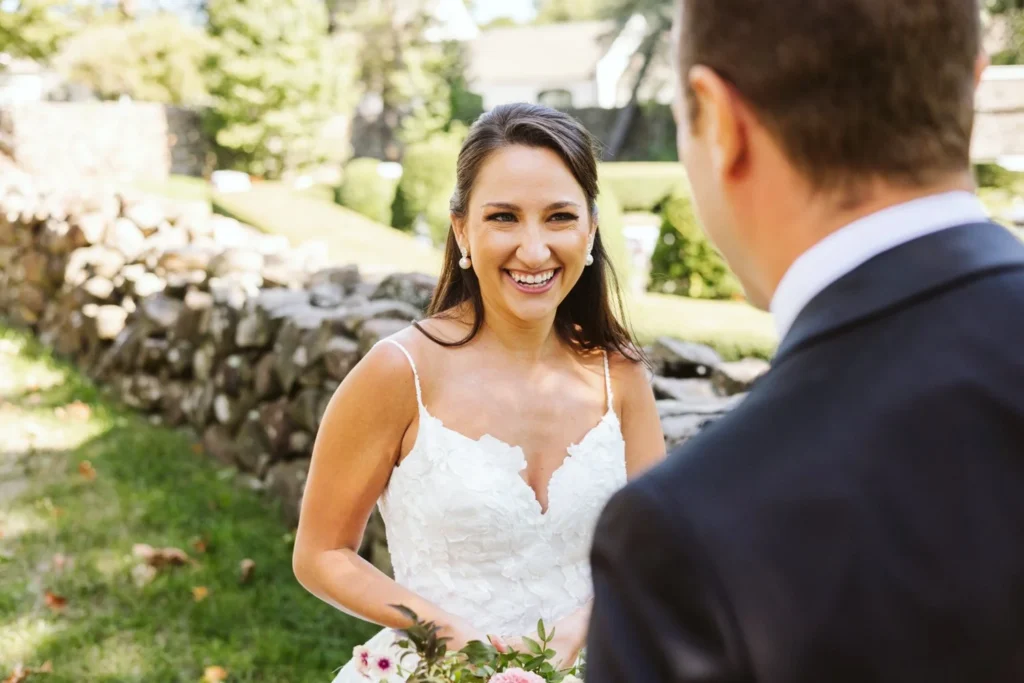
The path above the Sunken Garden: shaded, quiet and hidden from the lawn; where we photographed the first look, and where we would put yours.
Inside the Sunken Garden: the dry-laid walls, the yew hedges and the summer house, for family groups; the walls throw even light at any hour.
The veranda and its columns: the white house behind the wedding party; a minute per grouping.
The West Lawn: the ceremony backdrop, and at sunset the best portrait ground on the estate, with the sun going down behind the tent and the trees.
Under the big trees: several shaded spots across the grounds that give soft light for groups in the middle of the afternoon.
The gallery inside the house: the Impressionist paintings, when the museum allows a few minutes indoors; ask the events office in advance.
The tent at blue hour: from the lawn looking back at the house once the string lights are on.
Because the lawn faces west over the meadow, the last light comes straight across it and the meadow softens to grey behind you. Read more on golden hour wedding photos.
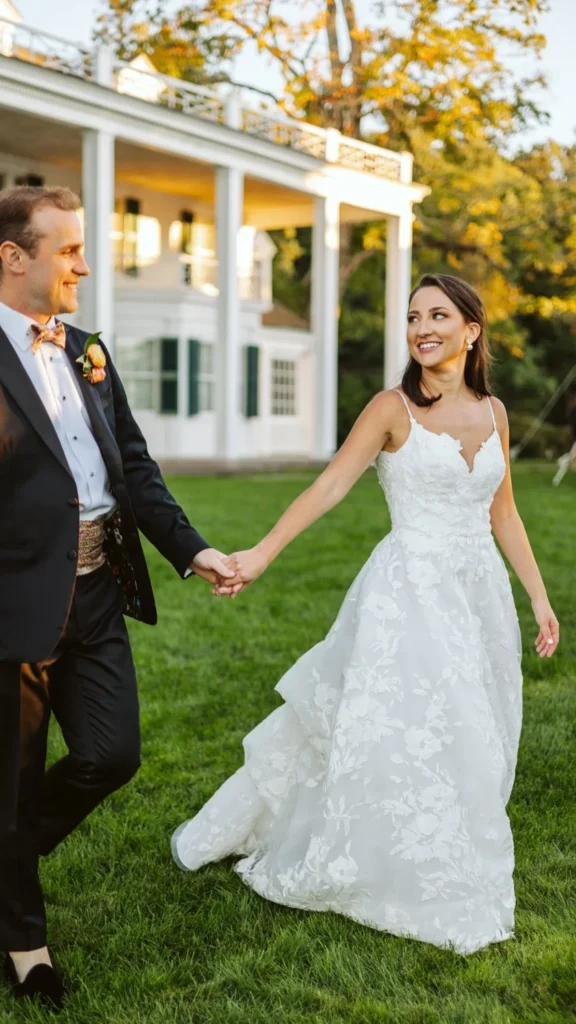
The groom got ready at the Avon Old Farms Hotel: a champagne flute, a floral bow tie and a flask.


Down the grass aisle to the altar under the trees, the vows, and a veil in the wind on the way back.
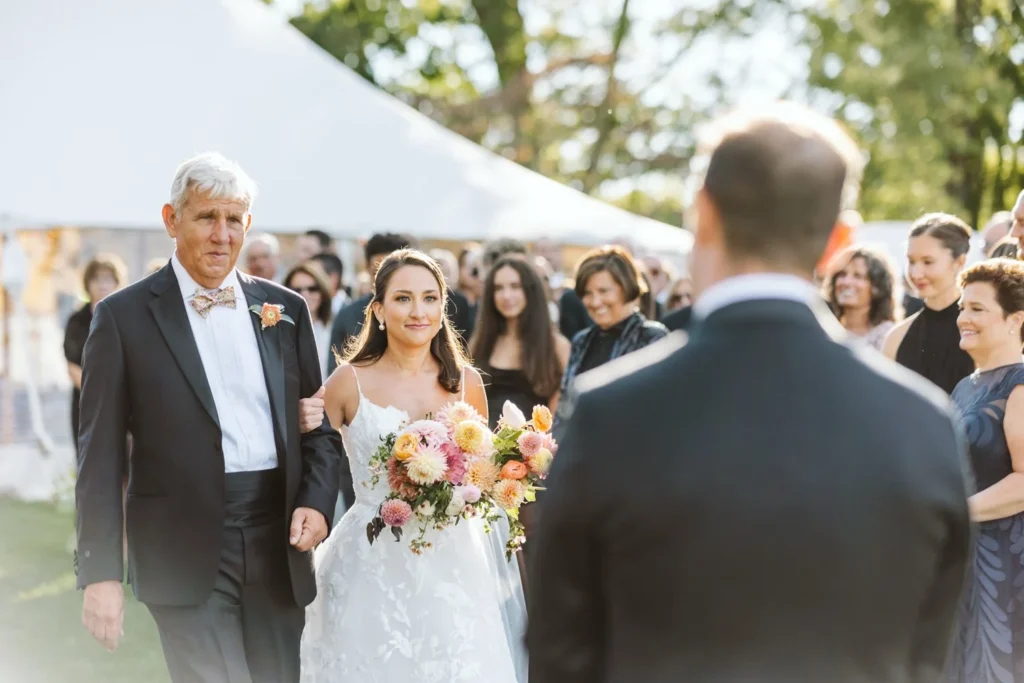
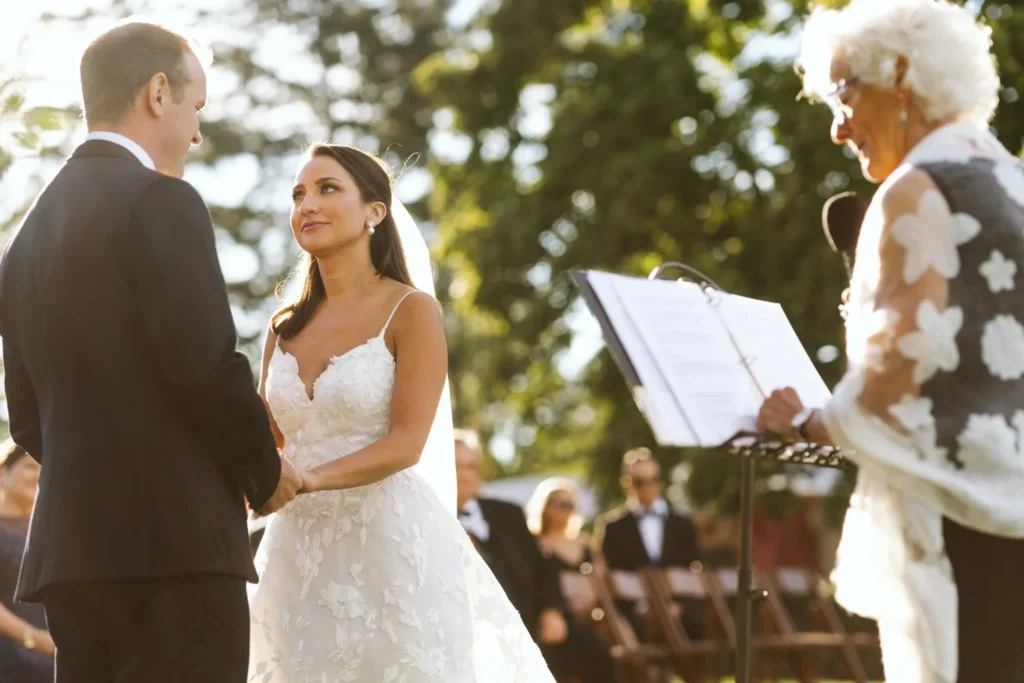
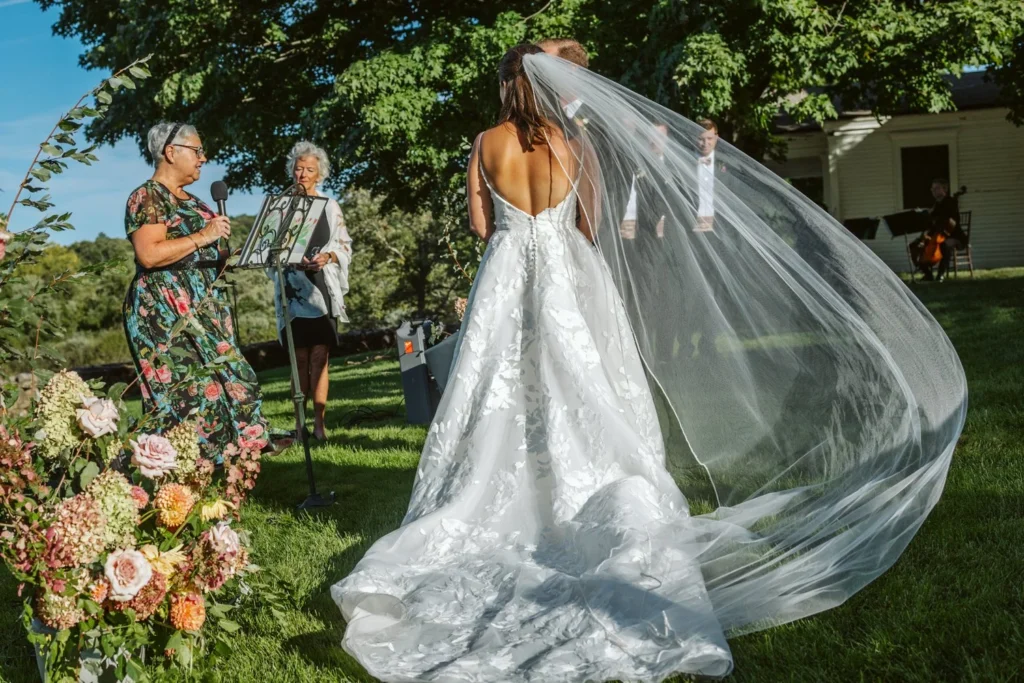
What your guests see: the couple, the meadow and the hills, with the house and the tent behind them.
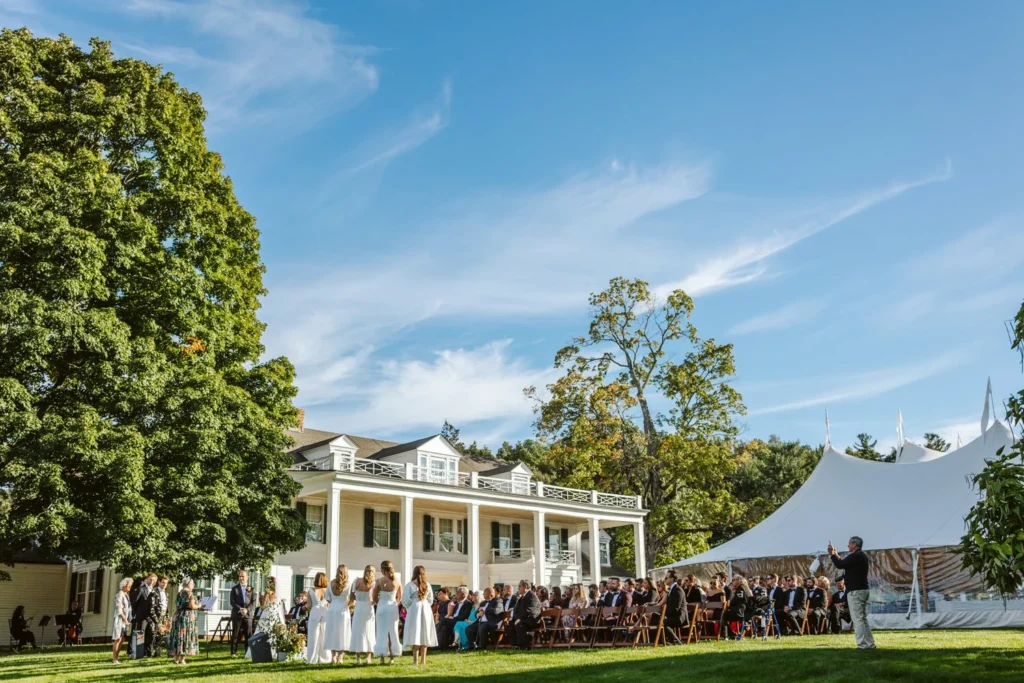
The altar up close, the ceremony under the trees, and the neon sign once the night got loud.
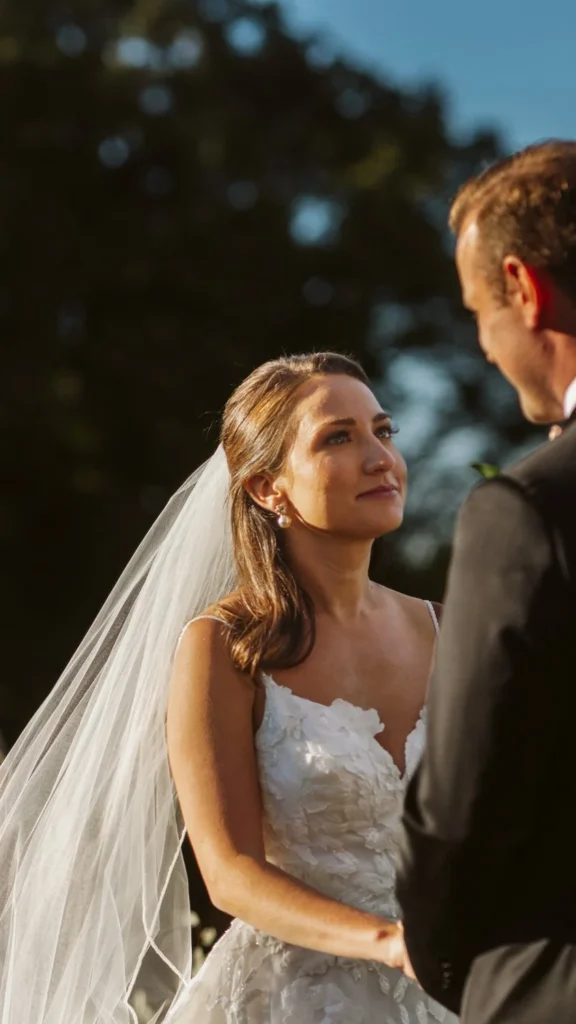
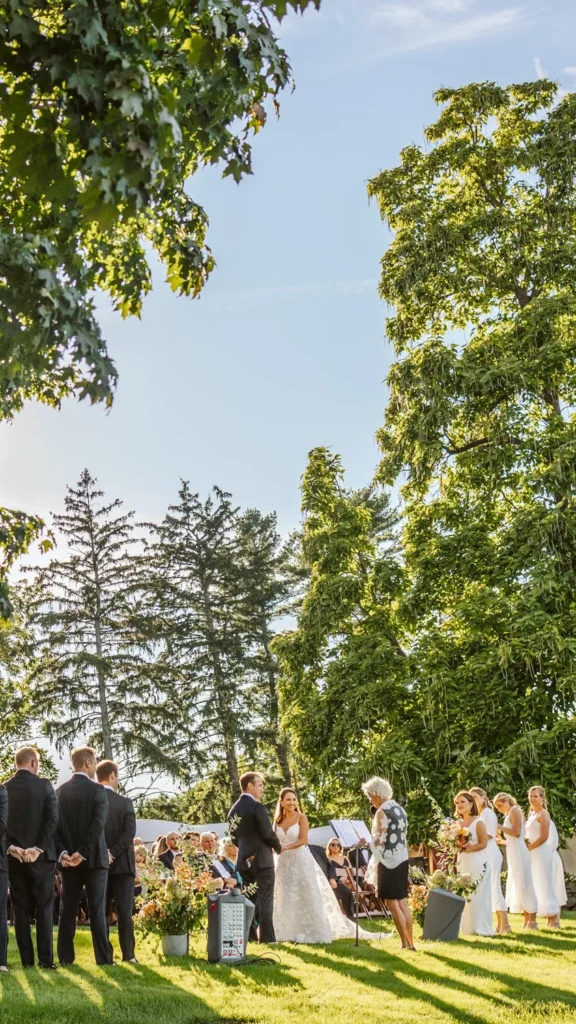

Cocktail tables in the Sunken Garden, the entrance, the bridesmaids’ walk to the lawn, and the china under the tent.
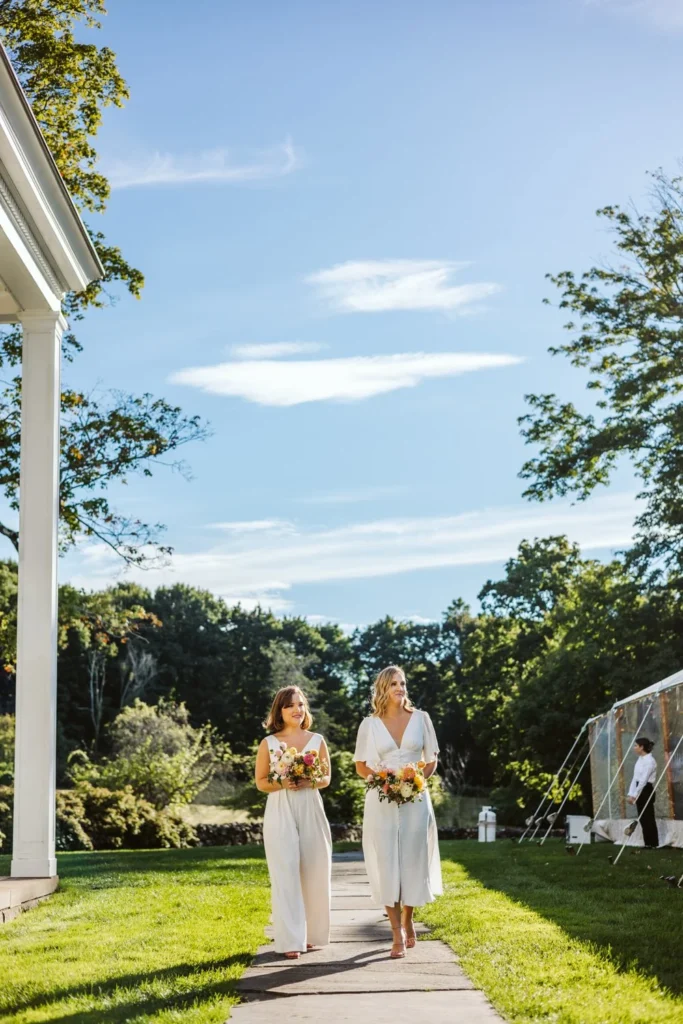
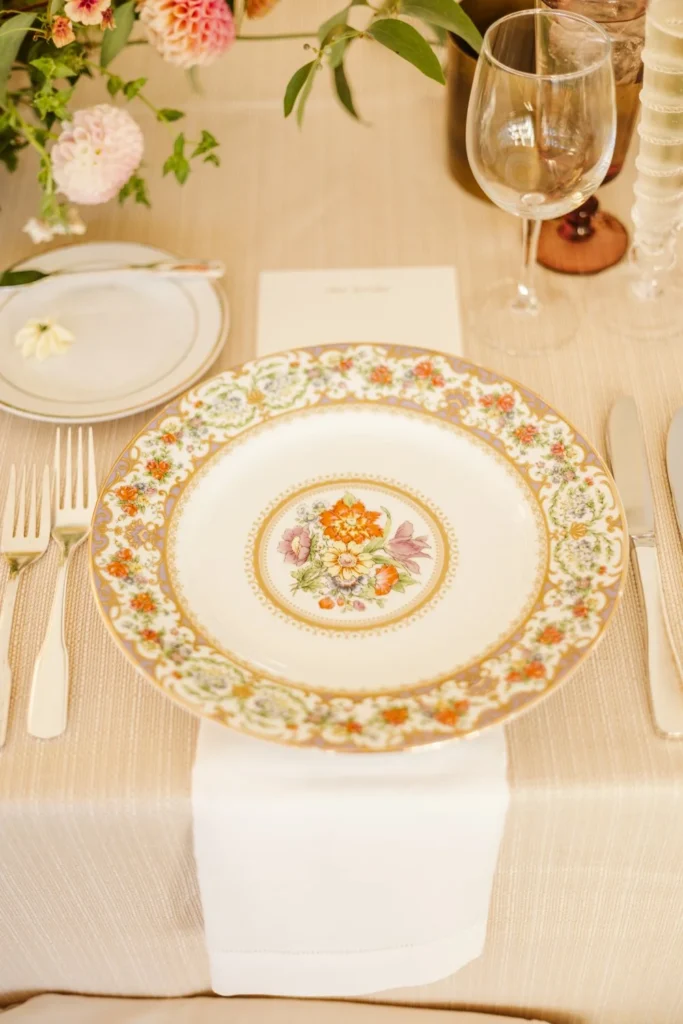
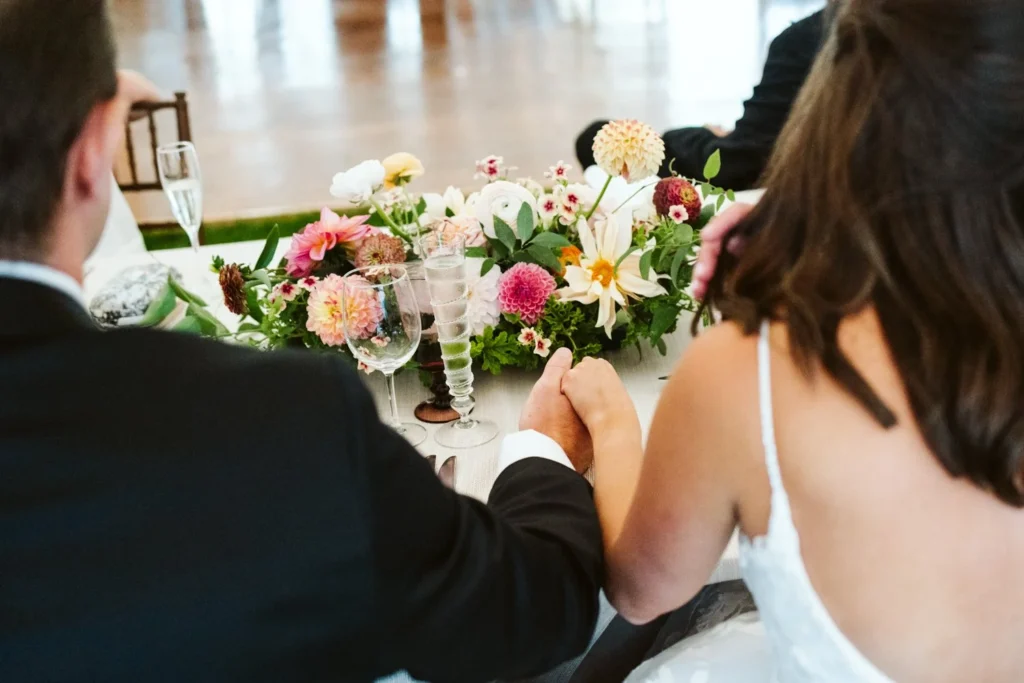
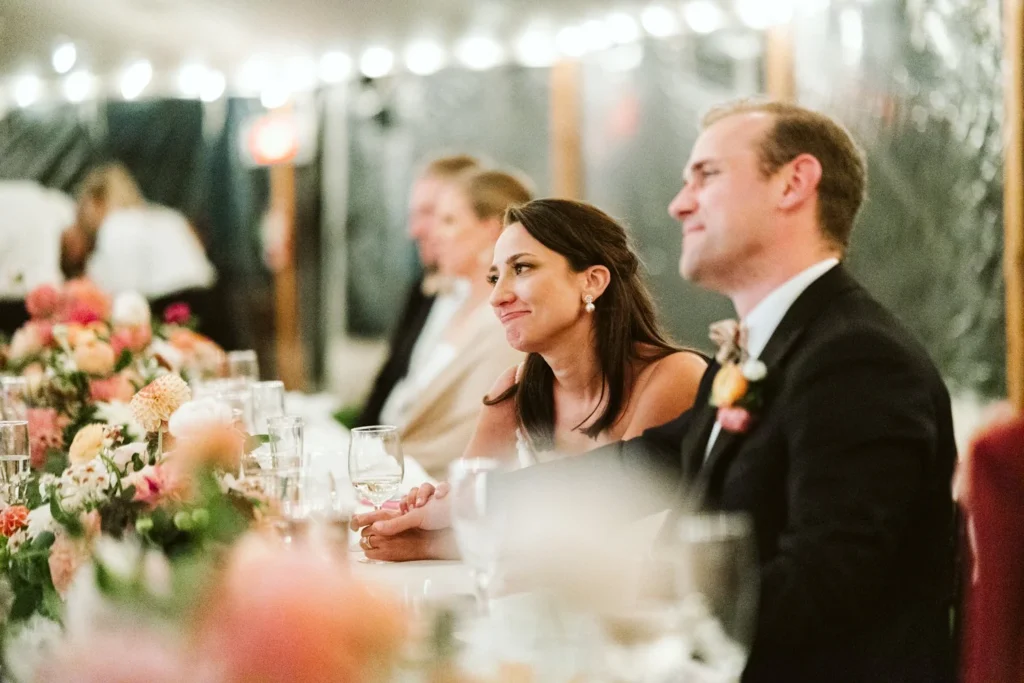
Greenery and disco balls over the dance floor, and a head table that laughed through every speech.
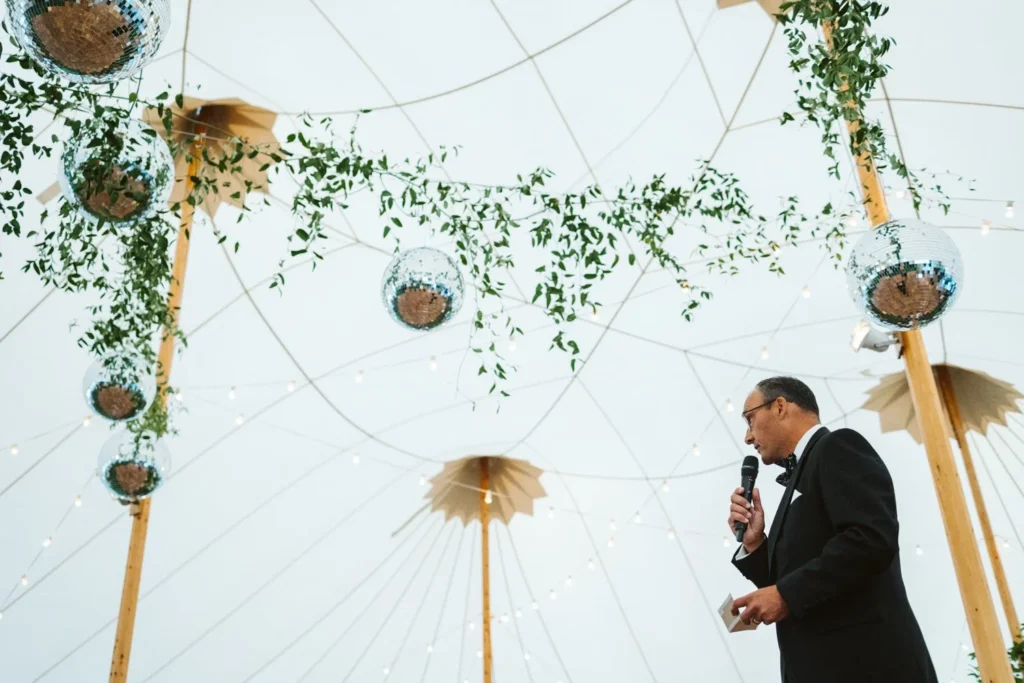
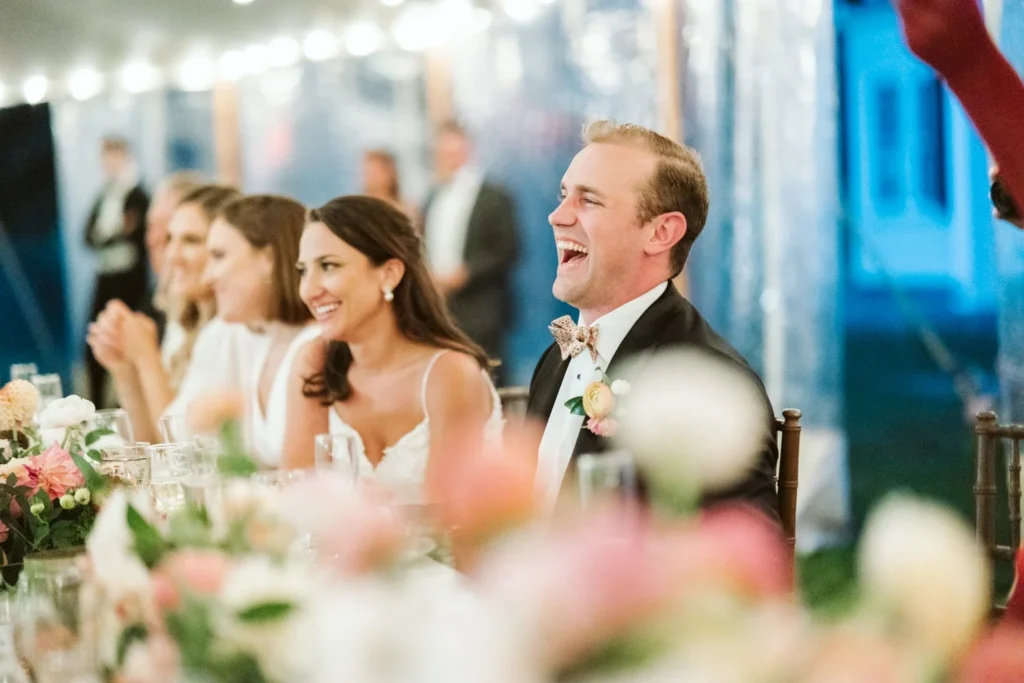
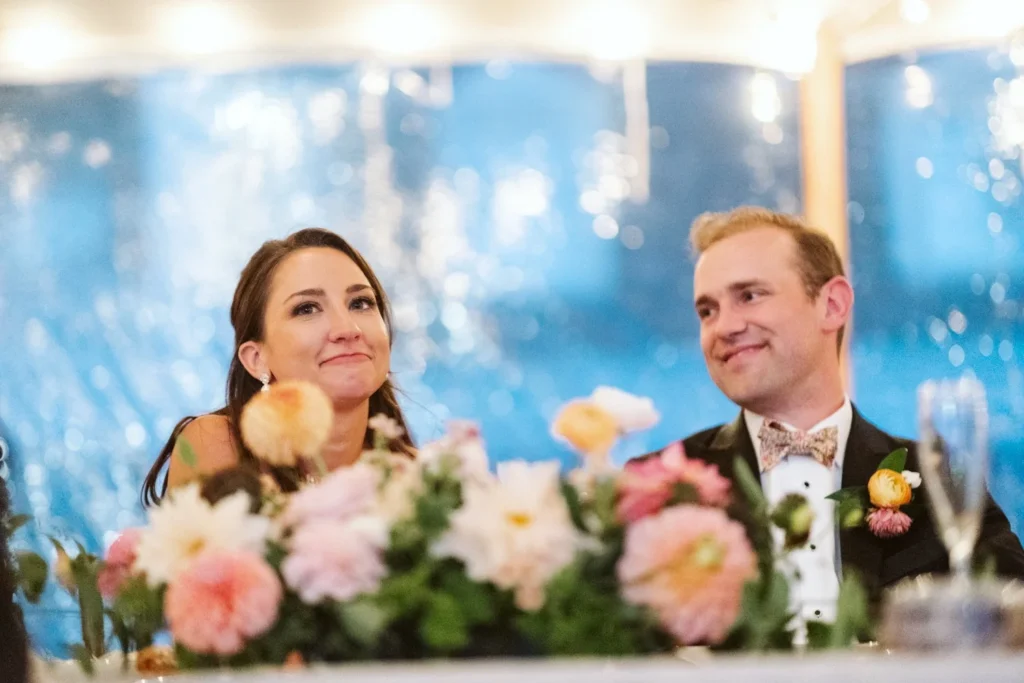
A speech under the disco balls, and the glasses that went up after it.

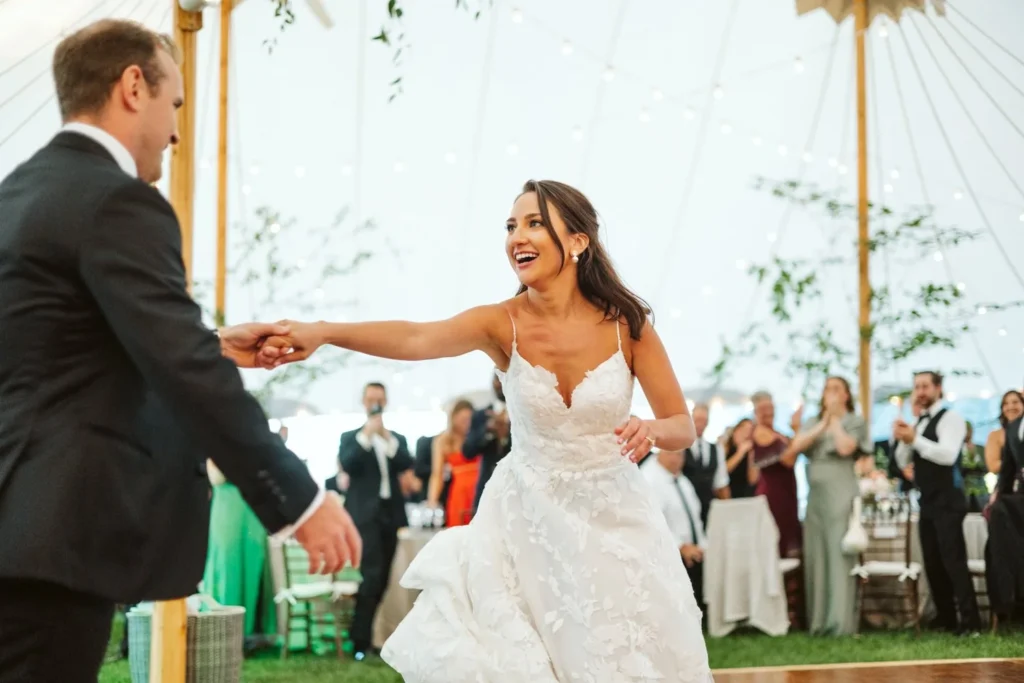
A first dance to Nat King Cole, then an eight-piece band until 10:30.
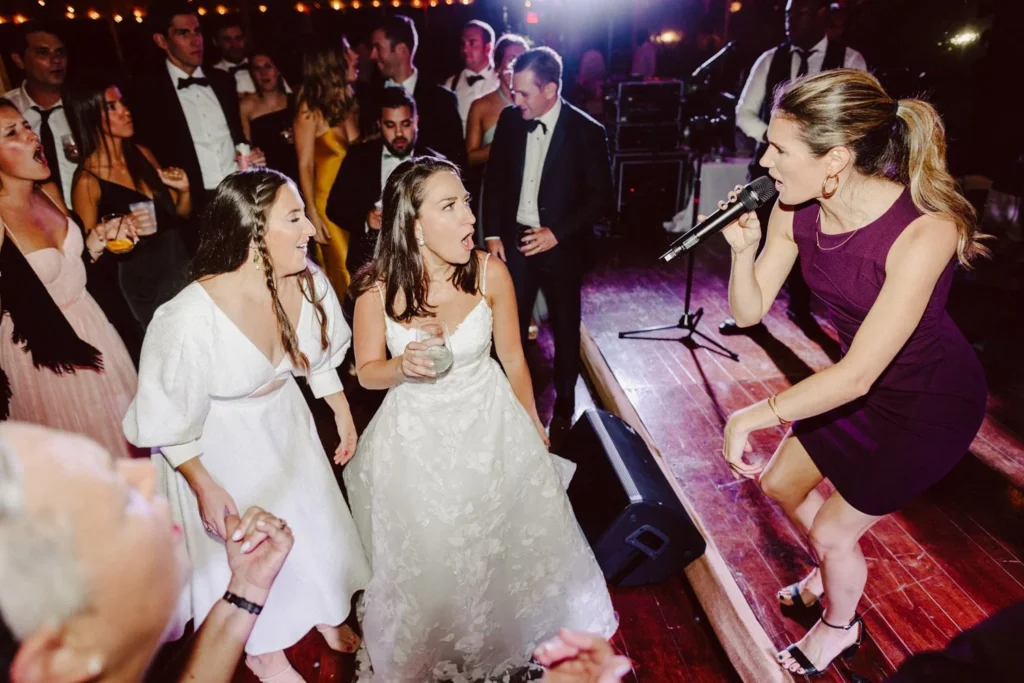
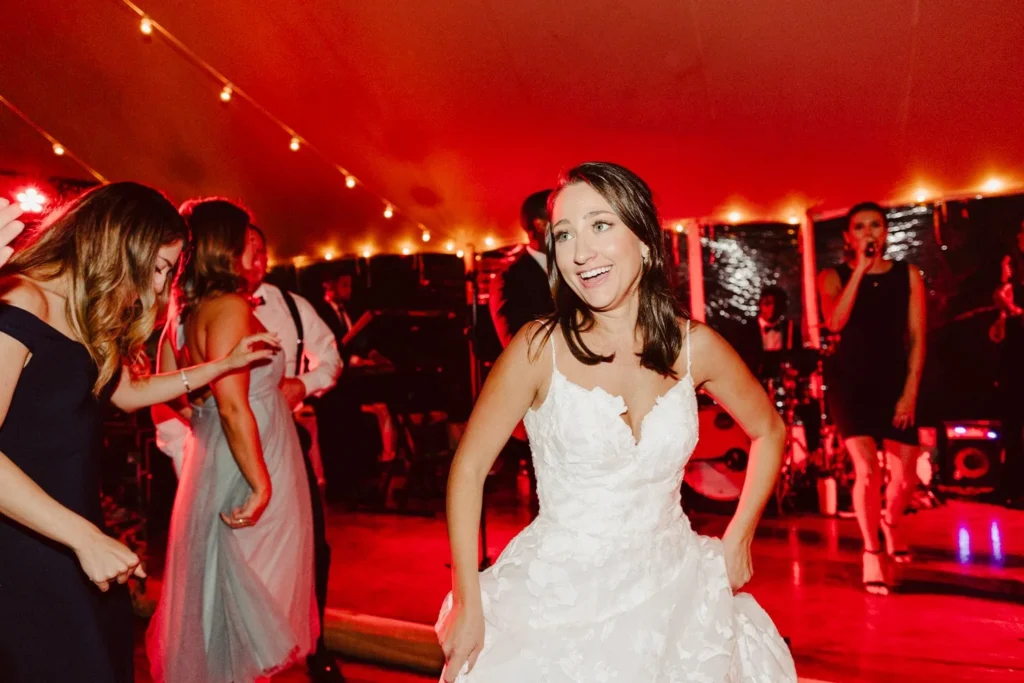
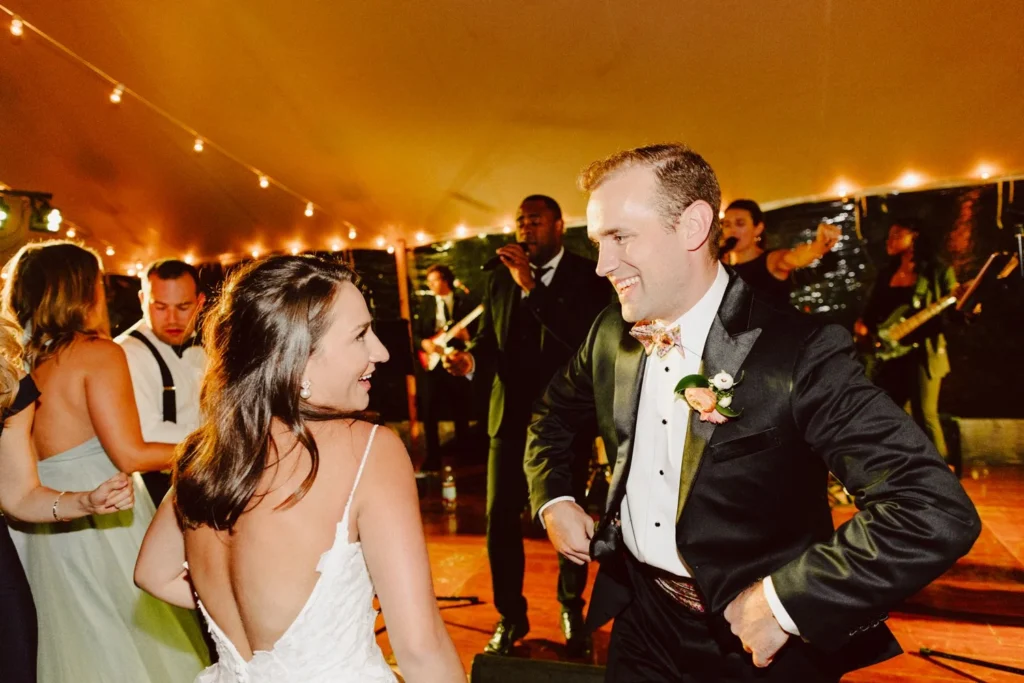
Red light, string lights and the band right behind the couple.
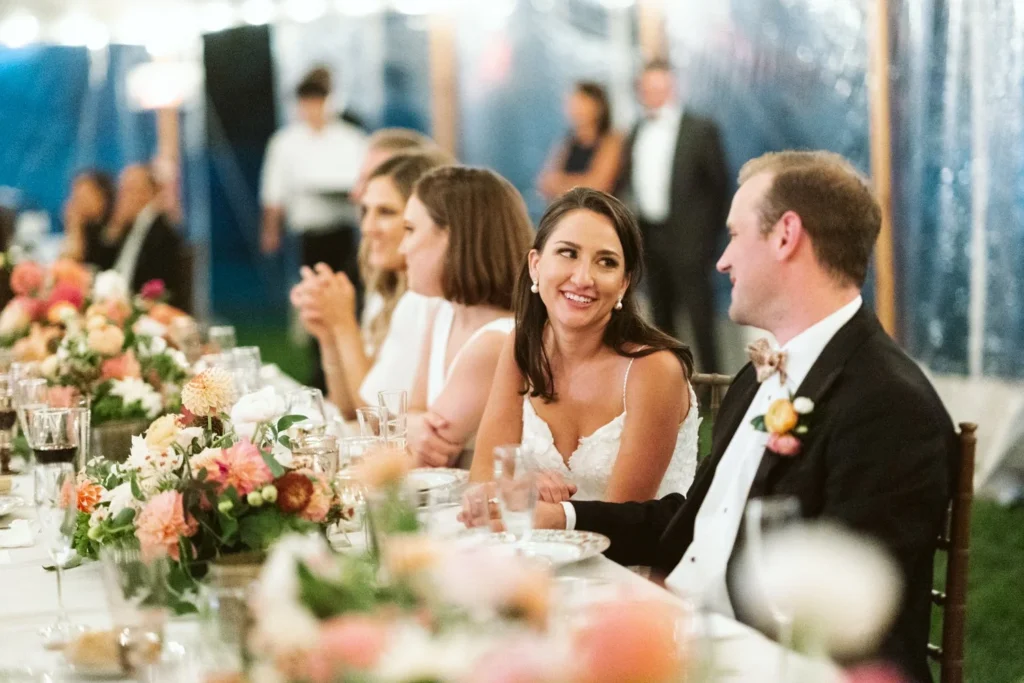
The only kitchen the museum offers is the warming kitchen in the Makeshift Theater, so every wedding hires a full-service caterer, and the museum requires a certificate of insurance from them 30 days out. The museum keeps an approved list of caterers who’ve worked the property and says you’re not limited to it; the last list it published named Cafe Louise, David Alan Hospitality Group, Doro Catering, Emily’s Catering Group, Forks & Fingers, Russell’s Global Cuisine and Verbena Caterers. Verbena fed the wedding we photographed, and the food came up in the toasts.
The bar runs through the caterer or a bartending service, never self-serve, and everyone involved carries liquor liability coverage. Because the tent, the tables, the chairs and the linens all come from separate companies (Party Rental Ltd handled the rentals at the wedding we shot, with florals by Stems Floral Design), the museum strongly encourages a coordinator; Alyssa Jean Signature Events was on its list. Events over 150 guests also need portable restrooms.
What this means for the photographs is that the caterer sets the pace of the evening, not a hotel banquet manager. A caterer who has worked this tent before gets dinner out on time, and that is what leaves a ten-minute gap for the sunset walk before the light goes and the rental clock runs out. If you want film as well, our hybrid photo + video coverage covers a tented estate day with one team.
Hill-Stead timelines are set by the museum’s clock more than by anything else. The fixed points:
The bridal suite opens at 2 pm and vendors can set up from 2; the museum is open to the public until 4, so guests arrive after that and the ceremony is late afternoon.
The rental is six hours, with the start and music-off times set by the museum (see the FAQ), so the evening is compact.
Sunset moves from 8:29 in late June to 6:31 in early October, so the lawn portraits shift from after dinner to right after the recessional across the season.
The bridal suite is on site, but the couple we photographed got ready off the estate: the groom at the Avon Old Farms Hotel, the bride at her childhood home, and coverage started at both.
Two ways to run the afternoon, with and without a first look, are in our guides to planning a first look and a wedding day timeline without a first look. Both versions below assume a late-afternoon ceremony after the museum closes to the public at 4.
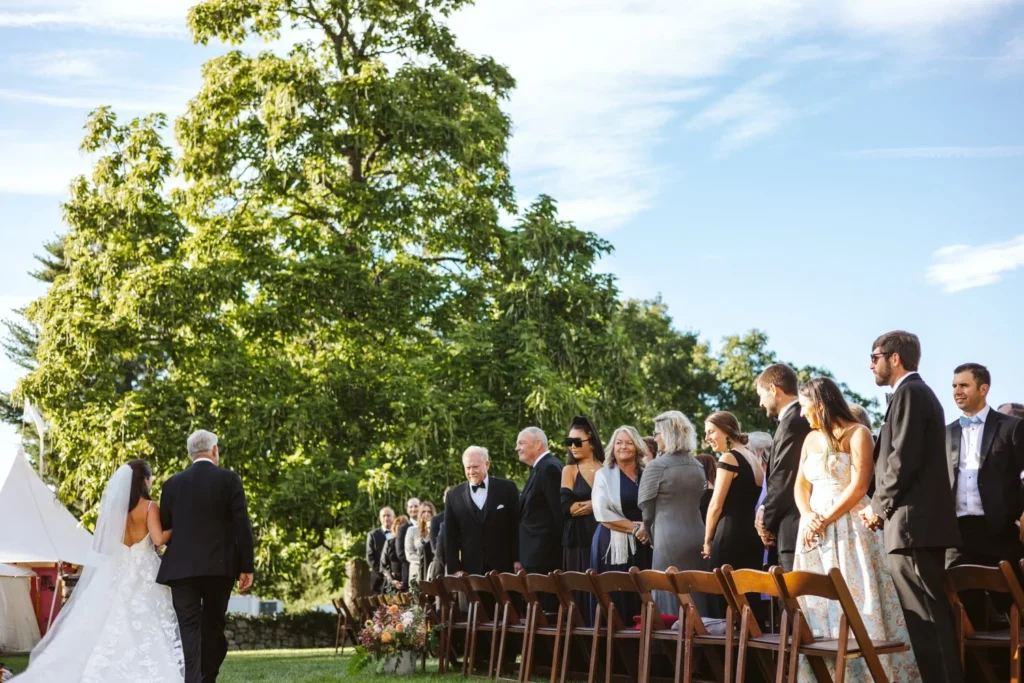
A mid-August Saturday at Hill-Stead, sunset about 7:50, with the couple’s portraits saved for golden hour during dinner.
1:30 PM, Coverage begins at the hotel and at home
3:30 PM, Bridesmaids photographed in the Sunken Garden and groomsmen on the veranda, on opposite sides of the house
4:00 PM, Museum closes to the public; guests arrive
4:30 PM, Ceremony on the West Lawn
5:00 PM, One frame of both families at the veranda columns, then cocktails in the Sunken Garden
6:15 PM, Guests seated under the tent; first dance and dinner
7:30 PM, Ten minutes on the West Lawn as the sun goes
7:45 PM, Toasts
8:15 PM, Parent dances, cake
8:30 – 10:30 PM, Band under the tent to the end of the six-hour rental
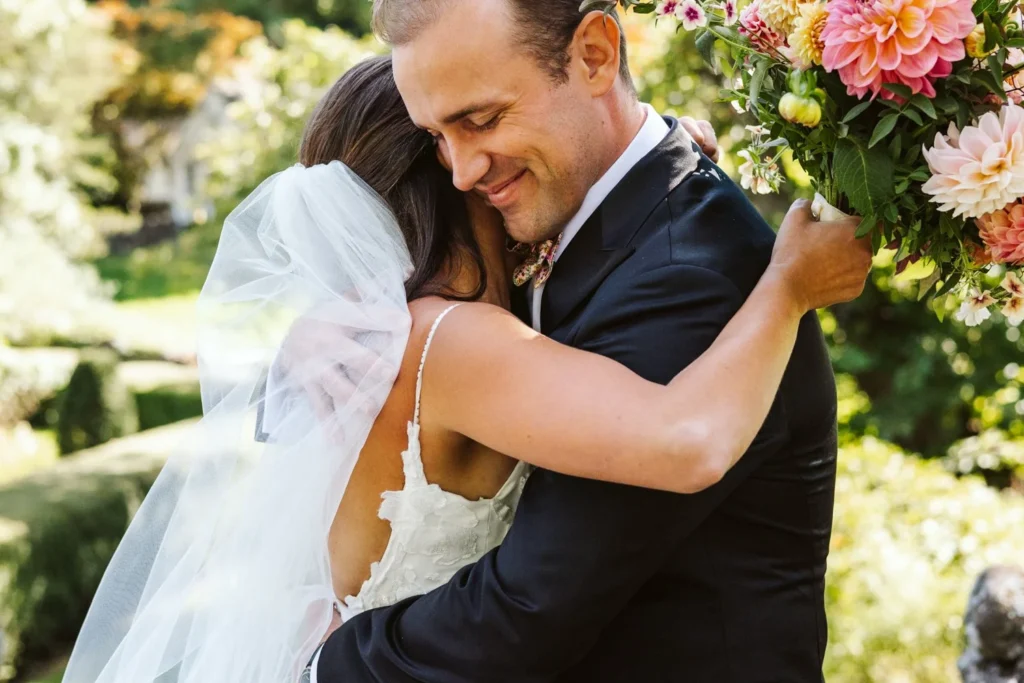
A late-summer timeline built on the day we photographed here: a first look above the Sunken Garden and every formal photo finished before a 4:45 ceremony.
12:30 PM, Groom at the Avon Old Farms Hotel; bride at home
2:30 PM, First look on the path overlooking the Sunken Garden
2:45 PM, The two of them along the garden wall and beside the house
3:30 PM, Wedding party and families at the veranda and in the garden
4:15 PM, Couple into the bridal suite; guests arrive
4:45 PM, Ceremony on the West Lawn
5:15 PM, Cocktails in the Sunken Garden and upper courtyard, with the couple in the garden
6:30 PM, Under the Sperry tent; first dance and dinner
7:30 PM, Five minutes on the lawn as the sun drops, then toasts, parent dances and cake
8:00 – 10:30 PM, Band, then the after-party at the Avon Old Farms Hotel
These are the couple’s wedding photos from Hill-Stead, from the first look on the path above the Sunken Garden to the band’s last song at 10:30: the West Lawn over the meadow, the garden at cocktail hour, the tent once the lights came on, and a dance floor under disco balls.
The full set is in a tented summer wedding at Hill-Stead Museum, and our wedding photography collections lay out what a day of coverage at an estate like this includes.
If you’re holding a Hill-Stead date, send it over and we will tell you whether we are free.
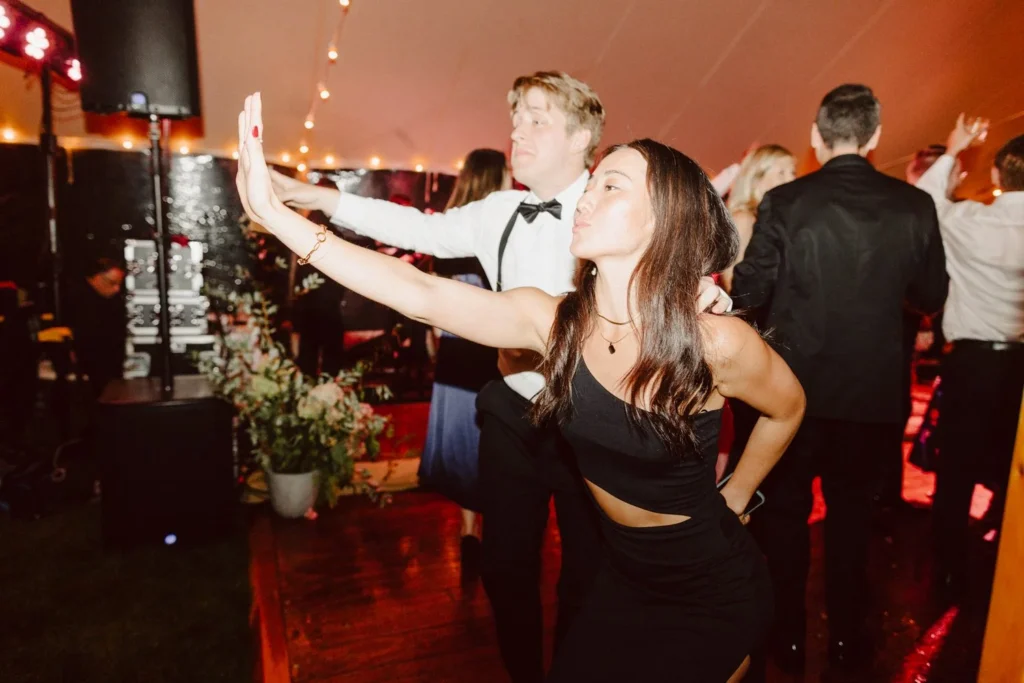
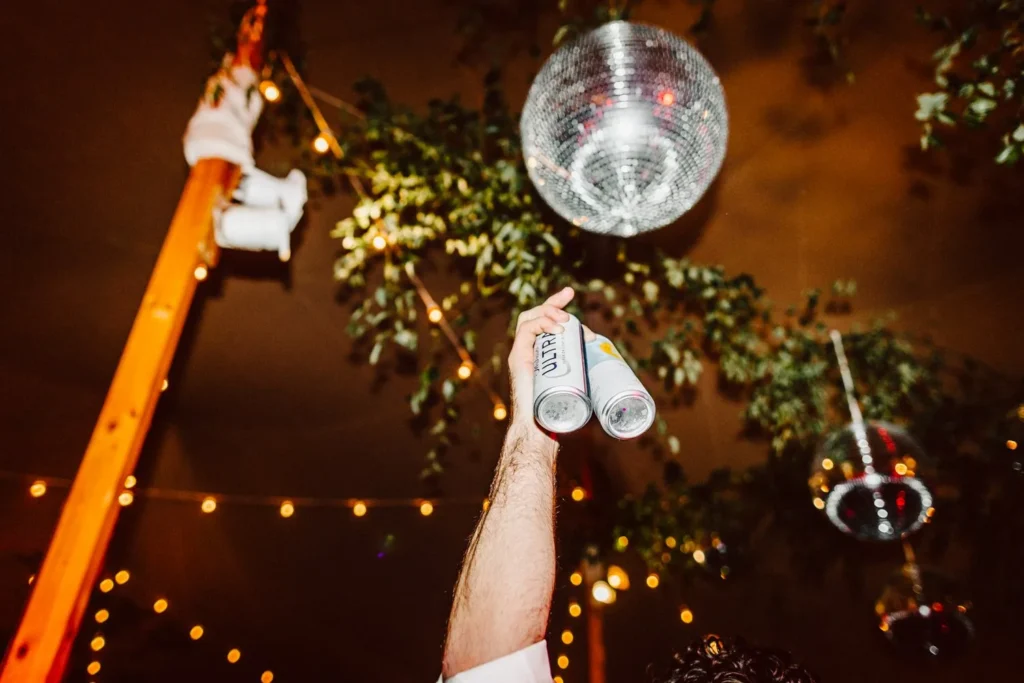
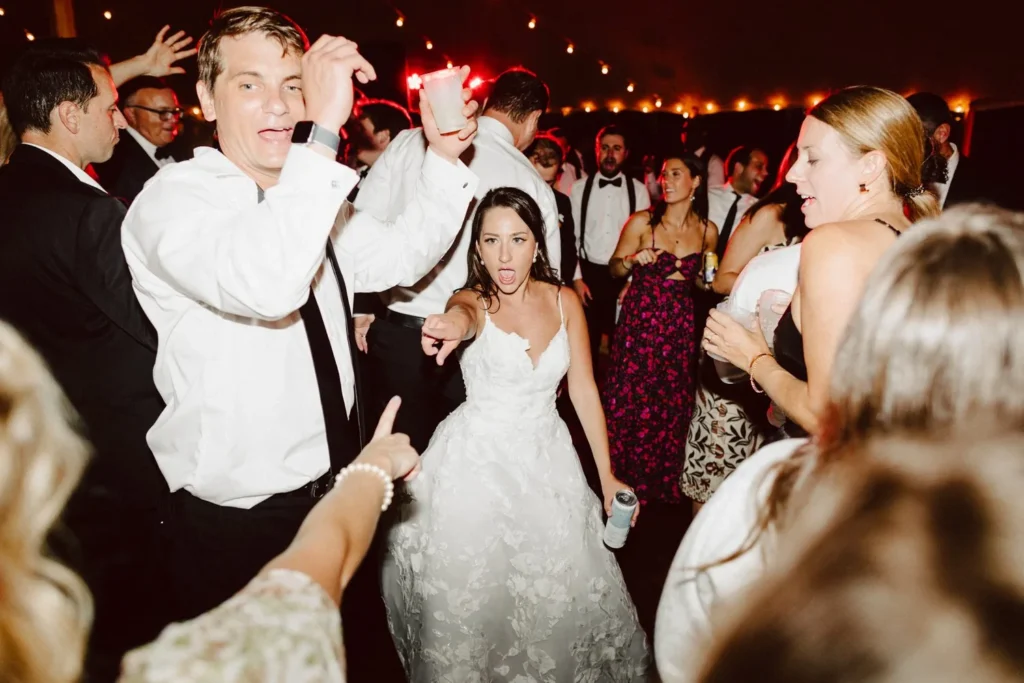
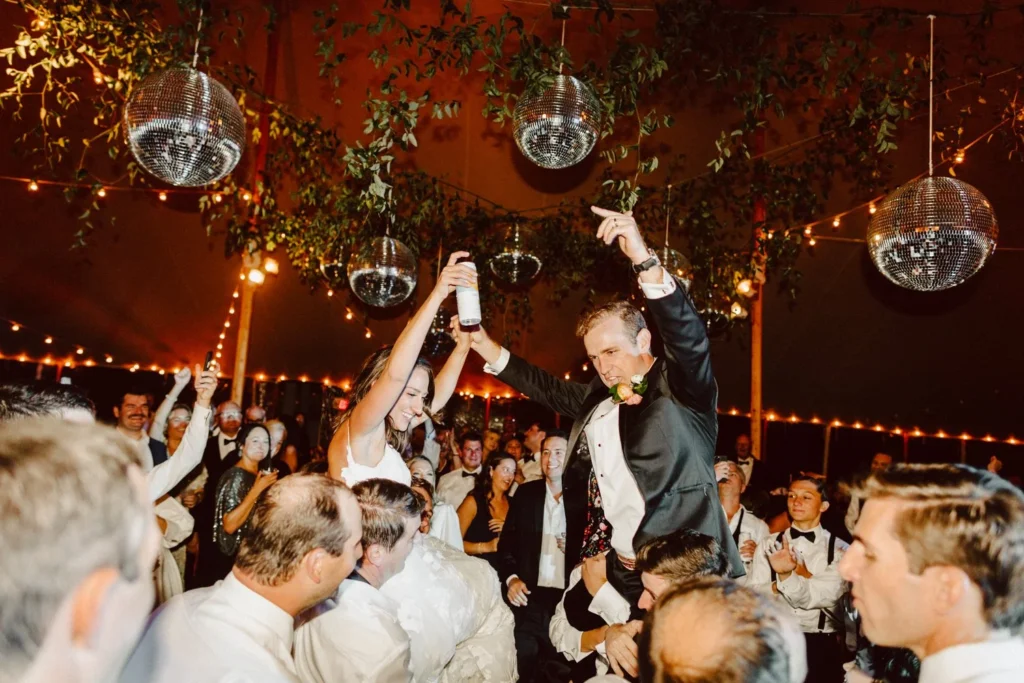
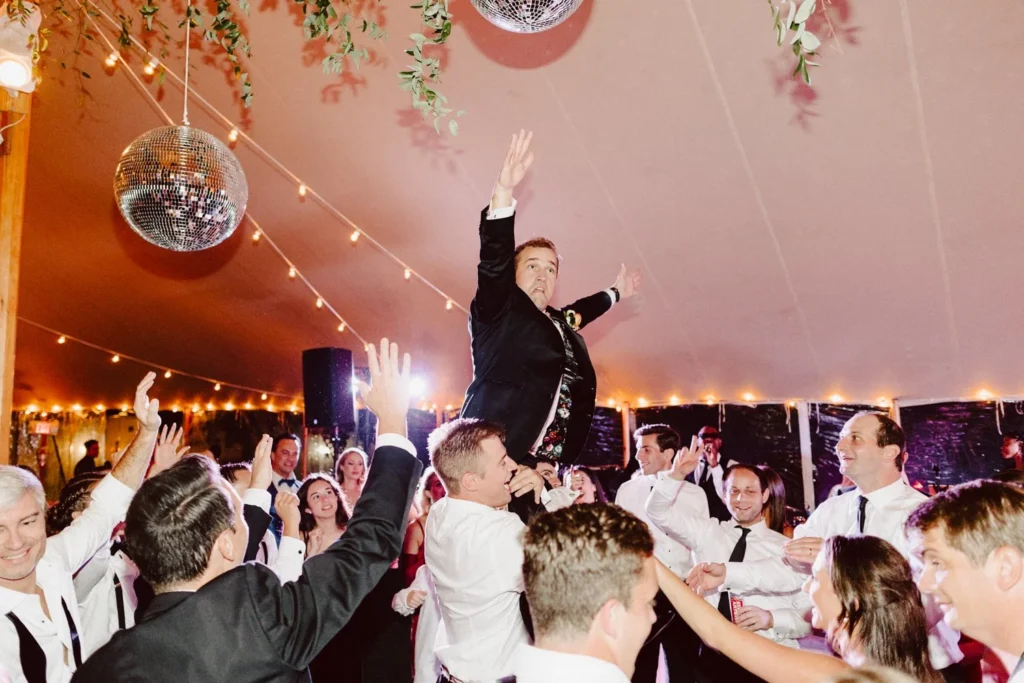
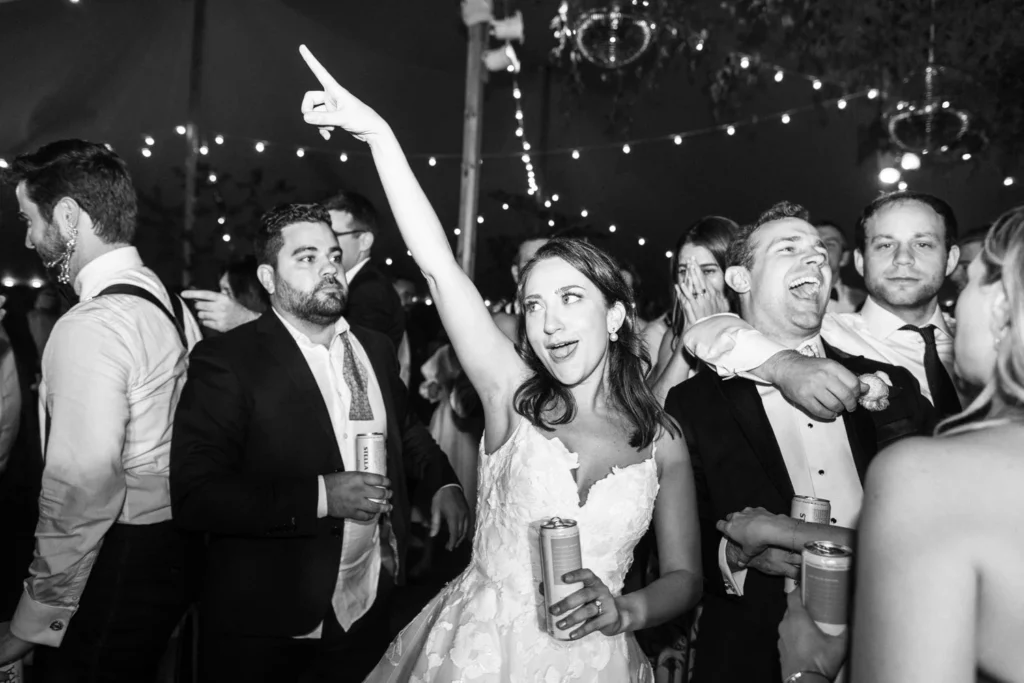
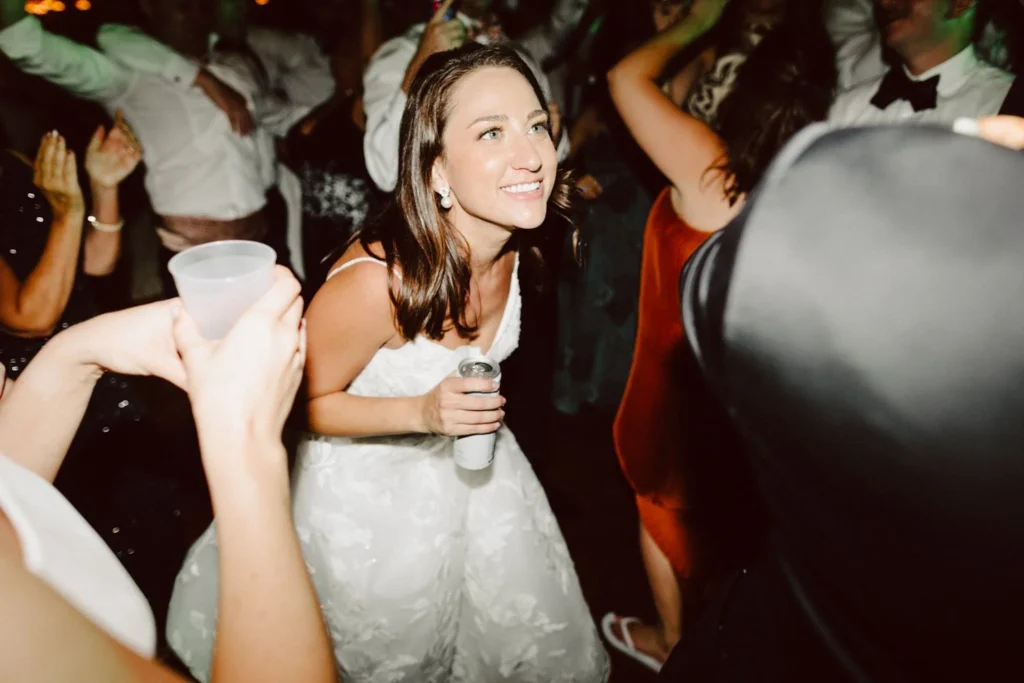
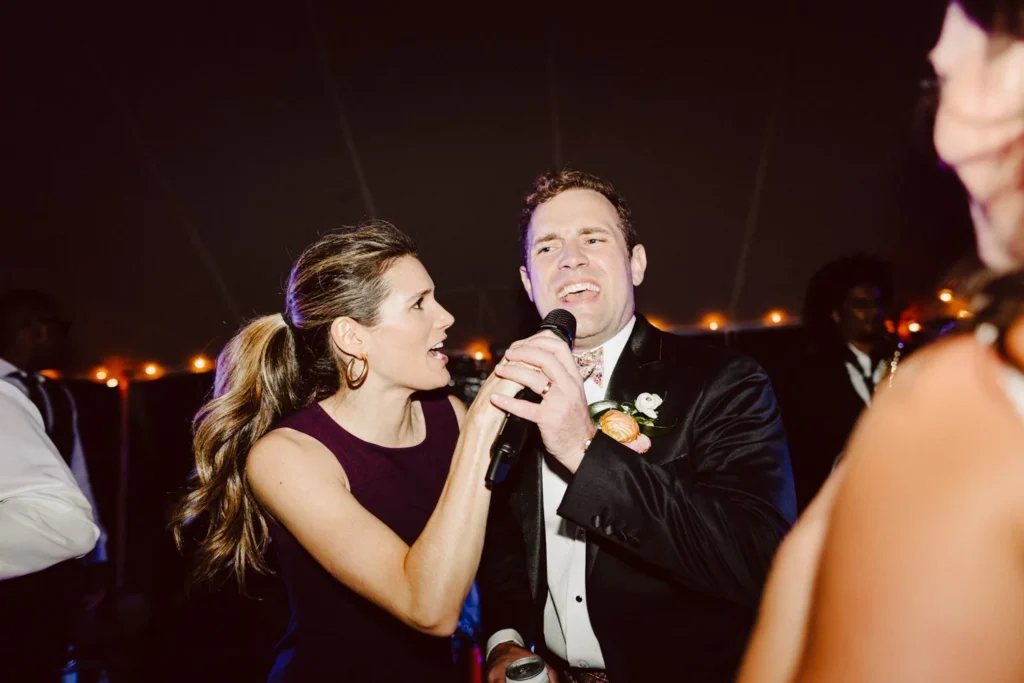
The stills show the estate; the films carry what it sounded like. Wind across the meadow during the vows, the band counting in under the tent, the Sunken Garden at cocktail hour. Three from the same summer wedding: a one-minute venue tour, an eleven-second highlight, and the full day’s highlights.
If you haven’t toured yet, this is the property in under a minute: the house, the West Lawn ceremony over the meadow, and a summer reception under a Sperry tent with florals by Stems Floral Design and rentals by Party Rental Ltd.
Eleven seconds from the same day: the lawn, the tent and the dance floor.
The couple’s day from the morning through the band’s last song: the first look on the path above the Sunken Garden, the West Lawn ceremony, and the tent once the lights came on.
More of our film work is in the wedding video portfolio and the full-length wedding films; the photo + video coverage page explains how one team covers both at an estate wedding.
Hill-Stead puts your guests in the Farmington Valley, about 20 minutes west of Hartford. The museum grounds are open to the public every morning from 8, the house tours run Wednesday through Sunday, Farmington’s village center is under a mile down the hill, and the Talcott Mountain ridge is a half-hour drive. Most out-of-town guests stay two nights.
Hill-Stead itself: the guided house tour (Wednesday to Sunday, 10 to 4) and the walking trails inside three miles of stone walls, open from 8 am, for the morning after.
Farmington village: the historic center along Main Street and the Farmington River, under a mile from the museum gate.
Heublein Tower: the hike up Talcott Mountain in Simsbury, about 28 minutes by car, with the valley laid out below.
West Hartford Center: restaurants and shops, on the way to the Delamar, about 13 minutes east.
Hartford: the Wadsworth Atheneum and the rest of downtown, about 20 minutes.
Farmington is a driving destination:
Airports: Bradley International in Windsor Locks is about 27 miles and 45 minutes; Boston’s Logan and the New York airports are both roughly two and a half hours.
Train: Amtrak and CTrail stop at Hartford Union Station, about 18 minutes by car.
Shuttles: most couples run a shuttle from a Farmington or Avon hotel block; rideshares work but can be thin on Mountain Road late in the evening.
Parking: well-lit guest parking on the museum grounds is included in the rental.
Dress code: garden-formal or black-tie optional; the wedding we shot here was tuxedos and long dresses.
Shoes: the ceremony, the garden paths and the tent are all on grass and stone, so block heels or flats.
Where to stay: the Farmington Inn, the Avon Old Farms Hotel or the Delamar in West Hartford from the museum’s list, or the Hampton Inn & Suites and Courtyard in Farmington.
Weather: it’s a hilltop over a meadow; bring a layer for the ceremony and the garden, even in July.
How late: the rental is six hours and the museum sets an early-evening music cutoff (see the FAQ); at the wedding we shot the band finished at 10:30 and the after-party was at a hotel bar.
The museum’s own published rates, last posted on its site in 2024, were a starting fee of $8,500 for a 100-person tented event on the lawns, $6,000 for a smaller wedding inside the Makeshift Theater, an $800 ceremony fee, a $700 Fire Watch fee that the Town of Farmington requires for any tent, an optional $600 open-house tour of the first floor for your guests, and a $500 refundable security deposit. Because Hill-Stead is a non-profit, no tax is added. On top of whichever number is current, you rent the tent, tables, chairs and linens and hire a full-service caterer, so the all-in cost tracks your guest count. Get the current rate sheet through Hill-Stead Museum private events.
A six-hour event on the grounds, well-lit on-site parking, a bridal suite from 2 pm on the day, a security guard and an event supervisor for the whole event, and, because the museum books only one wedding per weekend, a one-hour rehearsal the day before. The tent is not included, and neither is a caterer; the museum publishes an approved vendor list for both, though it says you’re not limited to it.
Yes, $800 on the museum’s 2024 rate sheet. That covers the West Lawn and Veranda for the vows, with the meadow, the pond and the hills behind you and the Mount Vernon-style veranda behind your guests; the one-hour rehearsal the day before is part of the rental itself. If you’d rather marry in the Sunken Garden, vendors can set up there from 2 pm.
A first set of roughly a hundred images comes inside a week; from this venue those are usually the first look above the garden, the vows with the meadow behind you, and the tent glowing at blue hour. The full gallery, every good frame with no cap on the count, is in your online gallery about two weeks after the wedding, and a highlight film like the ones on this page takes about a month. The full breakdown is in how long wedding photos take after the wedding.
The reception is under a tent already, so rain moves the ceremony under it too; order the sidewall package from your tent company and decide by noon. For weddings under 100 the Makeshift Theater, the 1917 building Theodate Pope built to show films, is the climate-controlled indoor room. Cocktail hour in the Sunken Garden is sheltered by the hedges and the stone walls, and the path above it, where we shot the first look, is under the trees.
The rental is six hours. The museum’s private-events FAQ, as last published in 2025, said weddings can start at 4:30 pm, music must end by 10:30 pm sharp in consideration of the neighbors, and guests leave by 11; confirm the current cutoff with the events office before you book a band. At the wedding we photographed the band played until 10:30 and the after-party moved to the Avon Old Farms Hotel bar, about fourteen minutes away, which is the pattern we would plan for.
You hire the caterer, but it has to be a full-service caterer with a certificate of insurance filed 30 days out, and the museum keeps an approved list of ones that have worked the property. The last list it published, in 2024, named Cafe Louise, David Alan Hospitality Group, Doro Catering, Emily’s Catering Group, Forks & Fingers, Russell’s Global Cuisine and Verbena Caterers; Verbena fed the wedding we photographed. The bar can never be self-serve: alcohol has to be bought through the caterer or a bartending service, and both they and you need liquor liability coverage.
With the museum: a tour, a contract, the $500 security deposit and a $1,000,000 special-events insurance policy naming Hill-Stead as additional insured. The museum also strongly encourages a coordinator and asks for your full vendor list two weeks before the day. With us: a signed agreement and a one-third retainer hold the date, and we book a single wedding per day so there’s no one else on our calendar that Saturday. Our collections run from $4,000 to $8,500; the wedding photography pricing and collections page has the detail.
Per the museum, the West Lawn takes events of up to 400 under a tent, the Grass Court next to it, once the estate’s grass tennis court, takes 150 to 200, and the Sunken Garden holds 200 standing for cocktails or 16 seated inside the summer house at its center. Indoors, the Makeshift Theater seats up to 100 at tables or holds 200 standing, and the Glass Room seats 40 to 50. Anything over 150 guests requires portable restrooms.
When we shot here the museum advised the couple to finish formal photos before the ceremony so they could be in the garden for cocktail hour, and with a six-hour rental there is no time to make up later. The path above the Sunken Garden is quiet, shaded and out of sight of the lawn, and the first look we photographed there is in the film below. We won’t push you into one if you’d rather wait for the aisle; read our guide to planning a first look and choose.
There’s no lodging on the estate. The museum’s own list names the Farmington Inn, the Avon Old Farms Hotel (about fourteen minutes north by road, which shares its name with the boys’ school Theodate Pope Riddle designed and founded in her father’s honor) and the Delamar in West Hartford (about thirteen minutes east). The Hampton Inn & Suites Hartford/Farmington is about seven minutes away and the Courtyard Hartford Farmington about twelve.
For 150 guests or more, yes, and Hill-Stead is a venue where it earns its keep even at smaller counts, because the ceremony, the garden and the tent are three different places and the light at 7 pm is on the lawn, not under the canvas. When we step out with the two of you at sunset, the second photographer stays with the tent: the toasts starting, the band setting up, the guests at the tables. The team leads we work with have all shot tented estate weddings, and we can add one until the week before. See wedding photography with a second shooter.
Planning a Hill-Stead wedding from out of state? Start with our wedding photography collections and the wedding planning guide. The museum puts Farmington at two hours from Boston; we would allow closer to two and a half, and we’ve photographed weddings across Connecticut as well as Massachusetts for years.
A meadow at the end of the aisle, a hundred-year-old garden for cocktail hour and a tent lit up against a white house after dark. Hill-Stead is a place we would photograph again tomorrow, and we would like to photograph it for you. Check your Hill-Stead wedding date.
